November 2025
Planning of the bucket list trip:
For our 30th anniversary of being together, I planned a bucket list trip. My husband has always been fascinated with how the Pyramids of Giza were built all of those years ago. He has developed so many theories himself after watching endless programmes about them.
I was a little apprehensive as I had researched a lot about going to Giza. We had already visited Hurghada and knew a little about their erratic roads and hassle that you may expect. We go to Sharm El-Sheikh in Egypt often. However, that is totally different. It is basically built for tourists and does not have the same manic roads or hassle there.
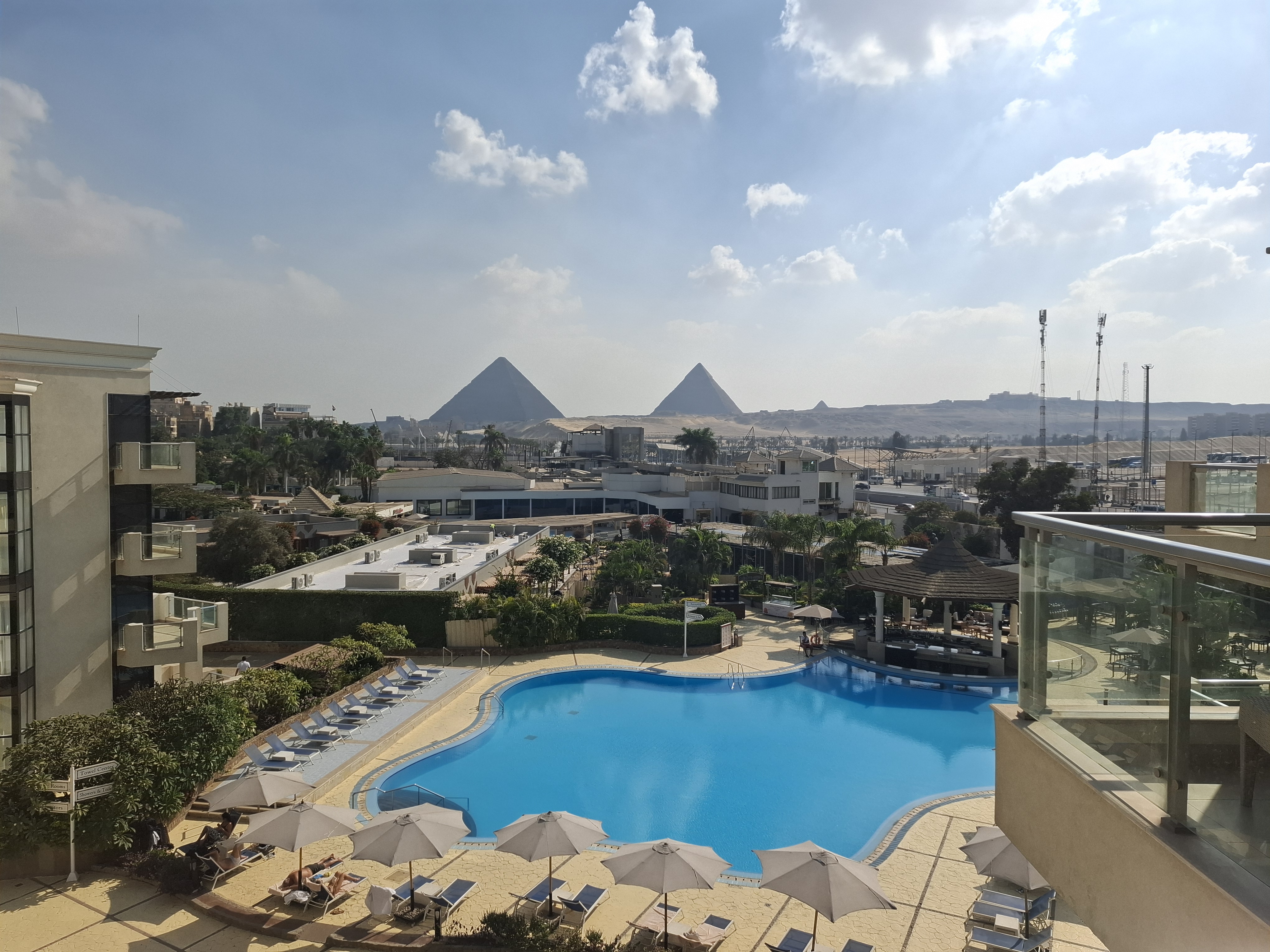
I booked a hotel that offered half board as I was unsure of walking around finding places to eat. I booked in Steigenberger Pyramids Giza Hotel with a room with a view of the pyramids. This was a lot more expensive than other hotels near to the pyramids but it was a special occasion….
To find out more about the hotel please visit: https://hrewards.com/en/steigenberger-pyramids-cairo
The journey to Giza:
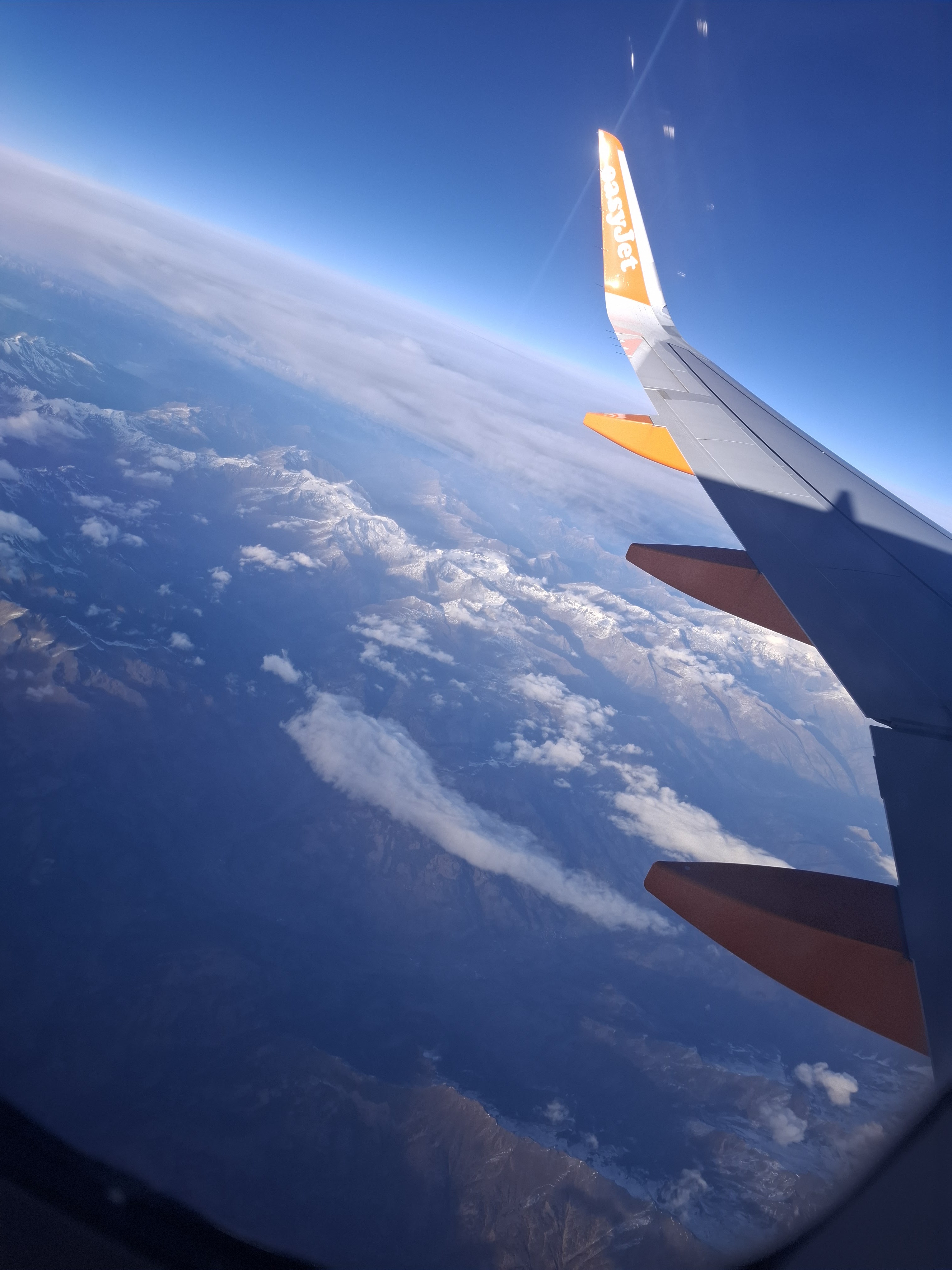
We flew from London Luton to Cairo Sphinx airport which all ran smoothly and we arrived on time. We had to get visas when we arrived. I attempted to do it online a week before, but the website was down. This was easy and cost 25 dollars per person. They gave you a visa sticker to show to passport control. Passport control put it in your passport before they stamped it. Our transfers were waiting for us. They held a name on a piece of paper. We were soon on our way to the hotel.
Arrival to hotel:
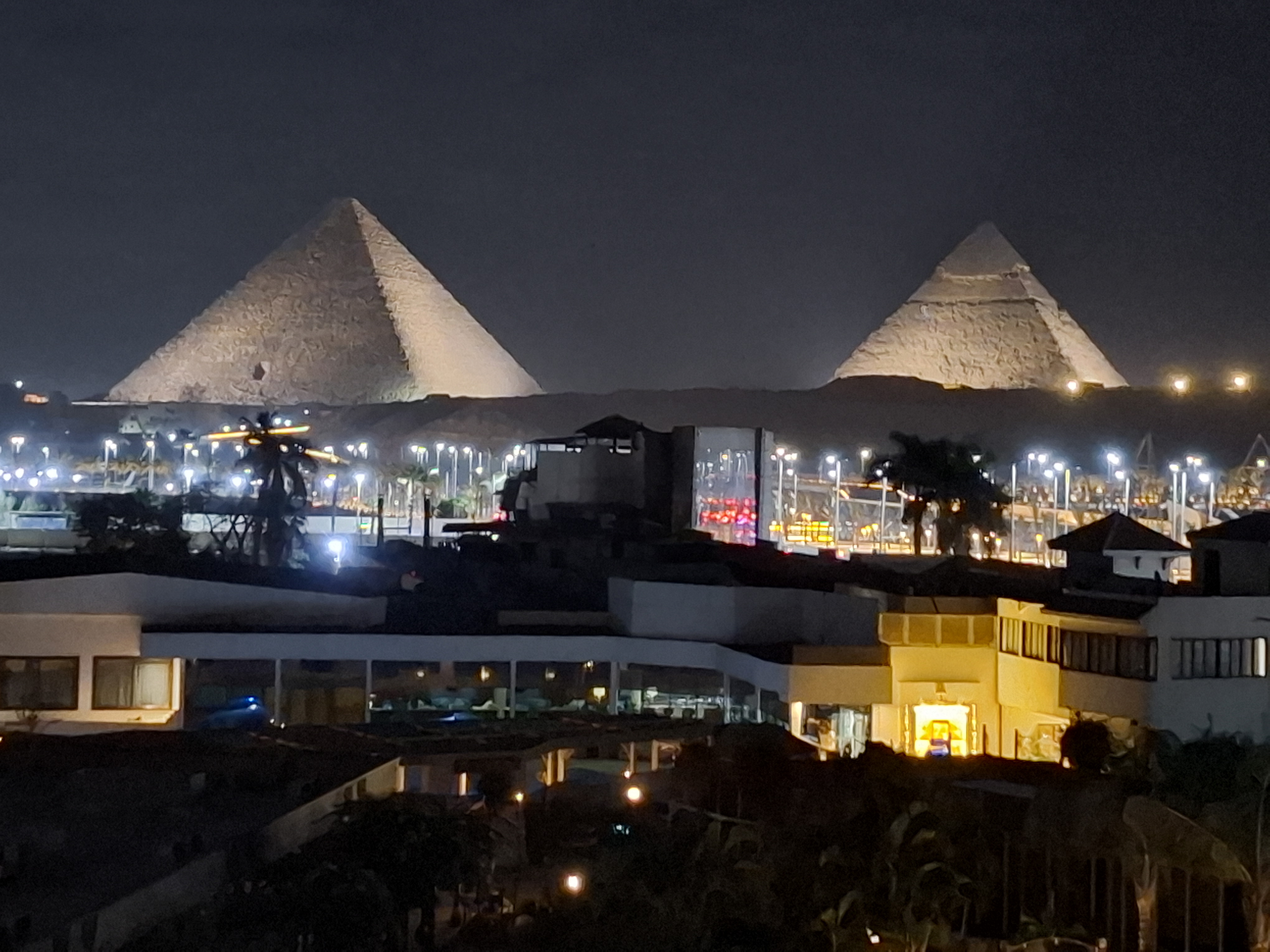
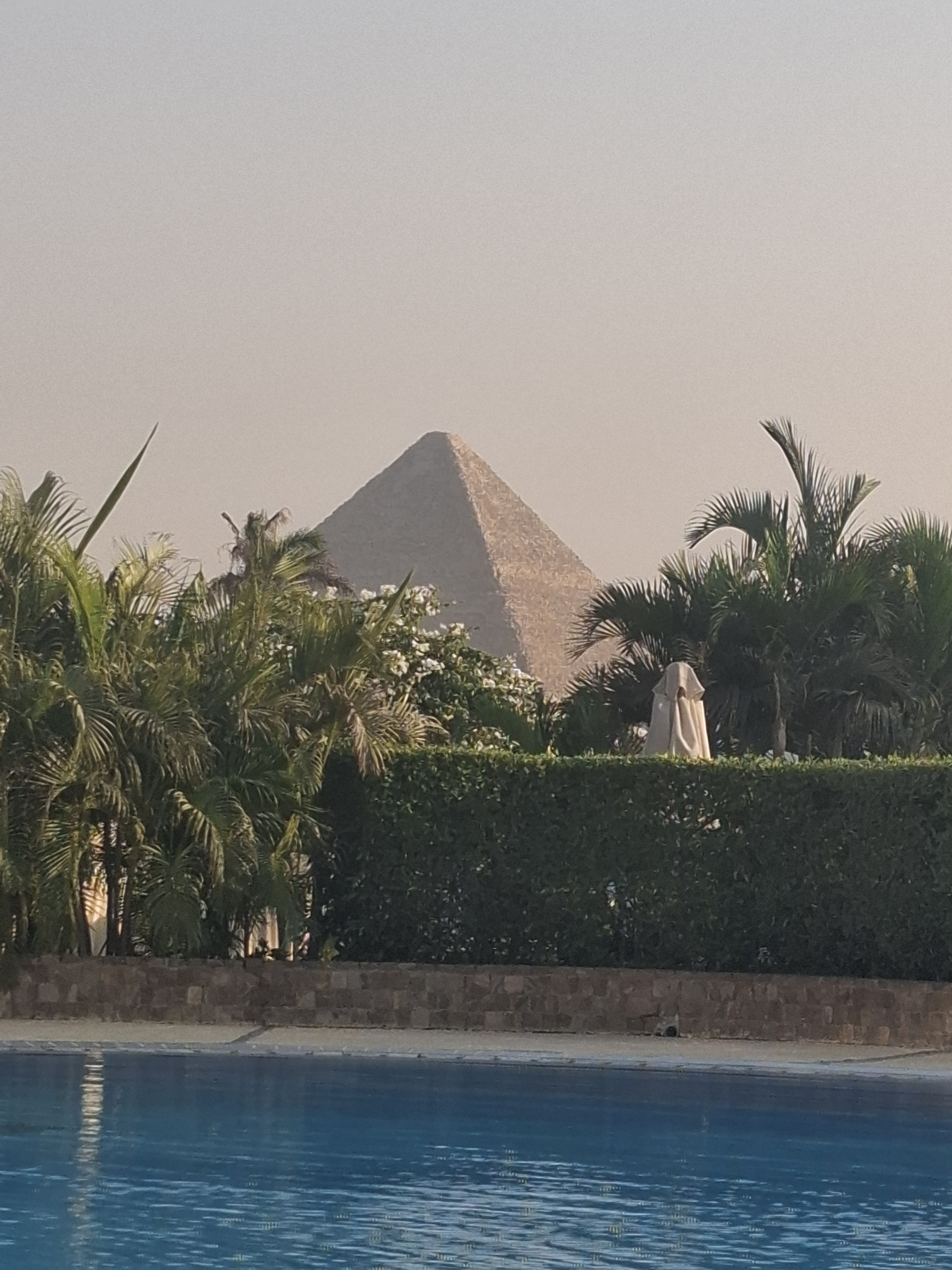
Arrival and check in at the hotel was very easy. However, the hotel was directly on to a 5 lane busy road! There was great security though. Check in was so easy. We were soon escorted to our suite by a porter. The room had been upgraded due to it being our anniversary! The porter showed us the room. It had a lovely queen sized bed. There was a balcony off of it with an amazing view of the pyramids. Then next to the bedroom was a separate sitting area. It had a settee, a TV, and another balcony with a view of the pyramids! This living area was mostly unused by us. We like to spend time outside when the weather is nice. However, we really appreciated being upgraded. The view of the pyramids was just unreal!
We headed for an evening meal which was luckily open until 10.30pm. An amazing selection and the chefs were very enthusiastic showing you what they had to offer. The dining room was really lovely and had nice furniture and ambience with an outside area too. It even had reading glasses to use so you can view the drinks menu if you forgot your glasses! The staff were all so helpful and friendly.
ALL inclusive day trip:
The next day, we had a full day excursion booked through one of my travel business suppliers. We had a lovely breakfast before being picked up by our private tour guide at 9am.
We had a private driver as well as a tour guide who had studied ancient Egyptology at University. Our first stop was at the Giza Pyramid complex.
Pyramids of Giza complex:
We had booked an inclusive day trip which included a ride on a camel as part of the package. After going through security, we waited a few minutes for our tour guide to get the tickets for the complex. Then, we jumped on the first hop on, hop off bus. This bus is included as part of your ticket for visiting the pyramid complex. We stopped to go on the camels first. Your first impression of the pyramids may not be the best when you arrive. The smell of camel poo greets you, along with pony poo too!
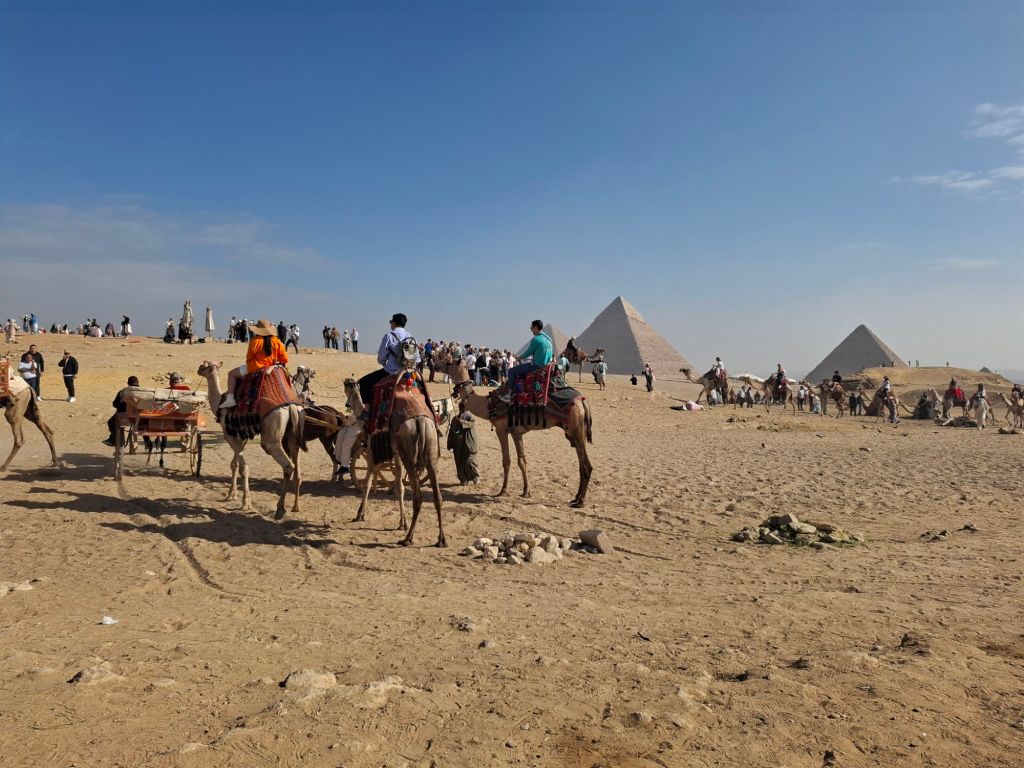
It was a bit chaotic. There were lots of stalls selling things. There were lots of camels and people waiting everywhere. The smell was just what you expect to be honest with lots of animals around. It was nowhere near the surreal pictures you see online although later we did get some pictures like this!
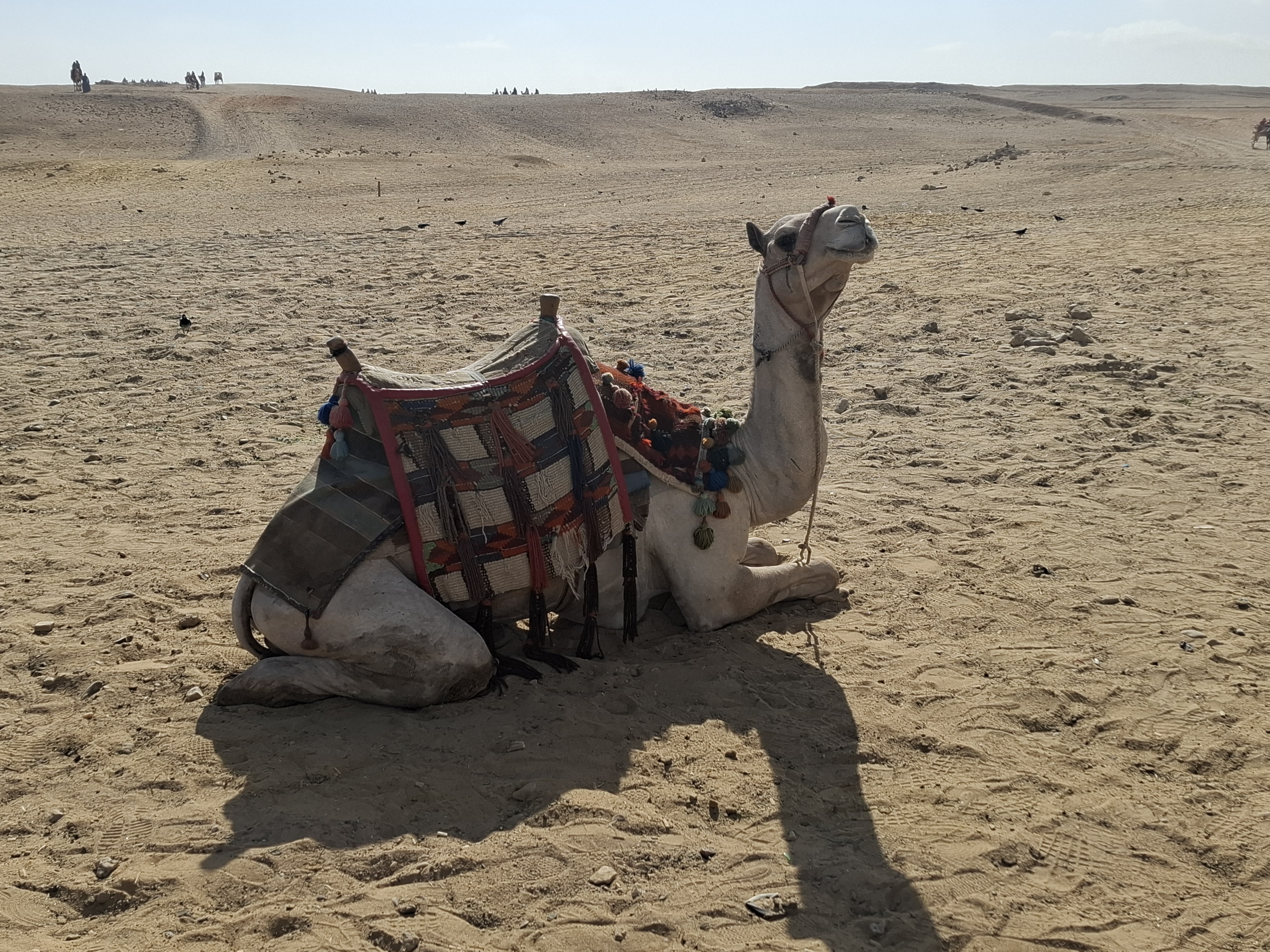
We had to wait a while for our tour guide to negotiate our ride with a local camel guide. My husband really did not want to do a camel ride. However, me being me, I thought it was a necessity when going to the pyramids! I absolutely was totally scared the whole trip on the camel!!!! I never felt I was properly on and thought I was going to fall off at any time! I gripped on for dear life and ached for a couple of days after gripping so hard! But it was so funny and a memory I will always remember! The guide was great and took some amazing photos along with a very funny video of us! I was even leading the way at one point. I was in front of 5 of us when the guide was taking pictures of other people!
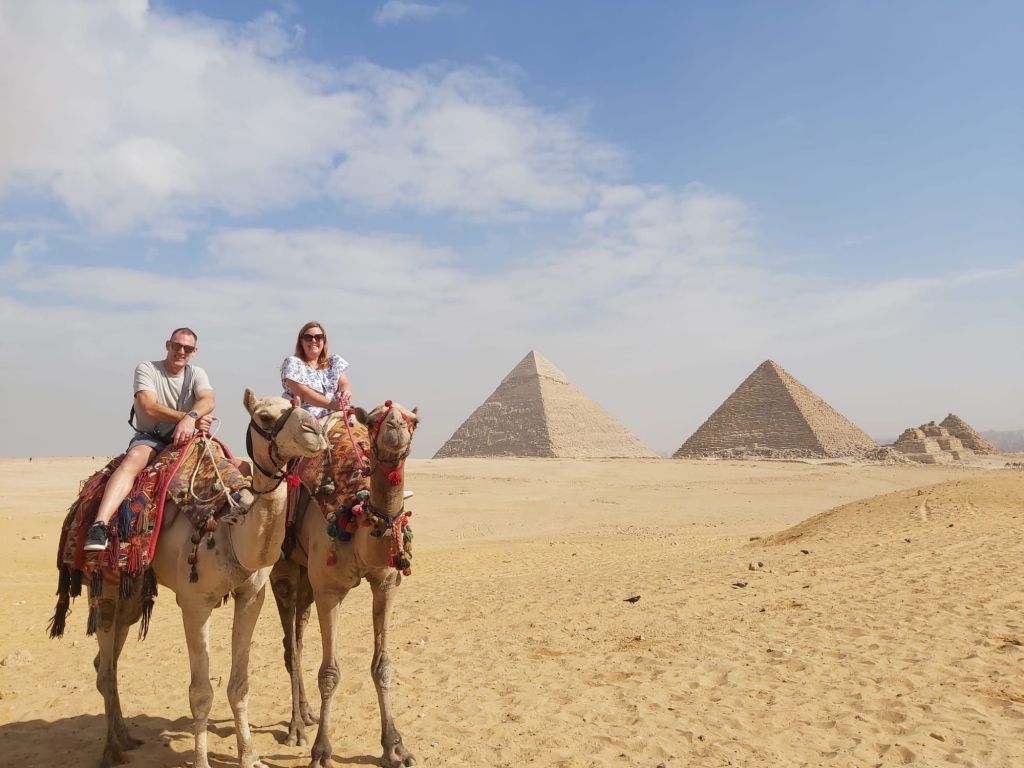
We got back safe and sound, although I was sweating like hell with anxiety! We visited the toilets after and had to pay for the privilege. Then we jumped on another hop on, hop off bus that was included to go to the main pyramids!
We arrived at the main pyramid complex. It is the location of the only remaining ancient wonder of the world, the ‘Pyramid of Khufu’. It is also known as The Great Pyramid of Giza. It did seem so surreal. I have no idea how they made the pyramids all of those years ago! Just crazy! It apparently was made out of 2.3 million stone bricks, weighing 6 million tonnes in total and was built around 2500 -2500 BC. Initially it stood at 146.6 metres high but now due to most of the smooth limestone casing being removed it stands at 138.5 metres high. It was so weird just standing there looking up at such a spectacular building built so many years ago!
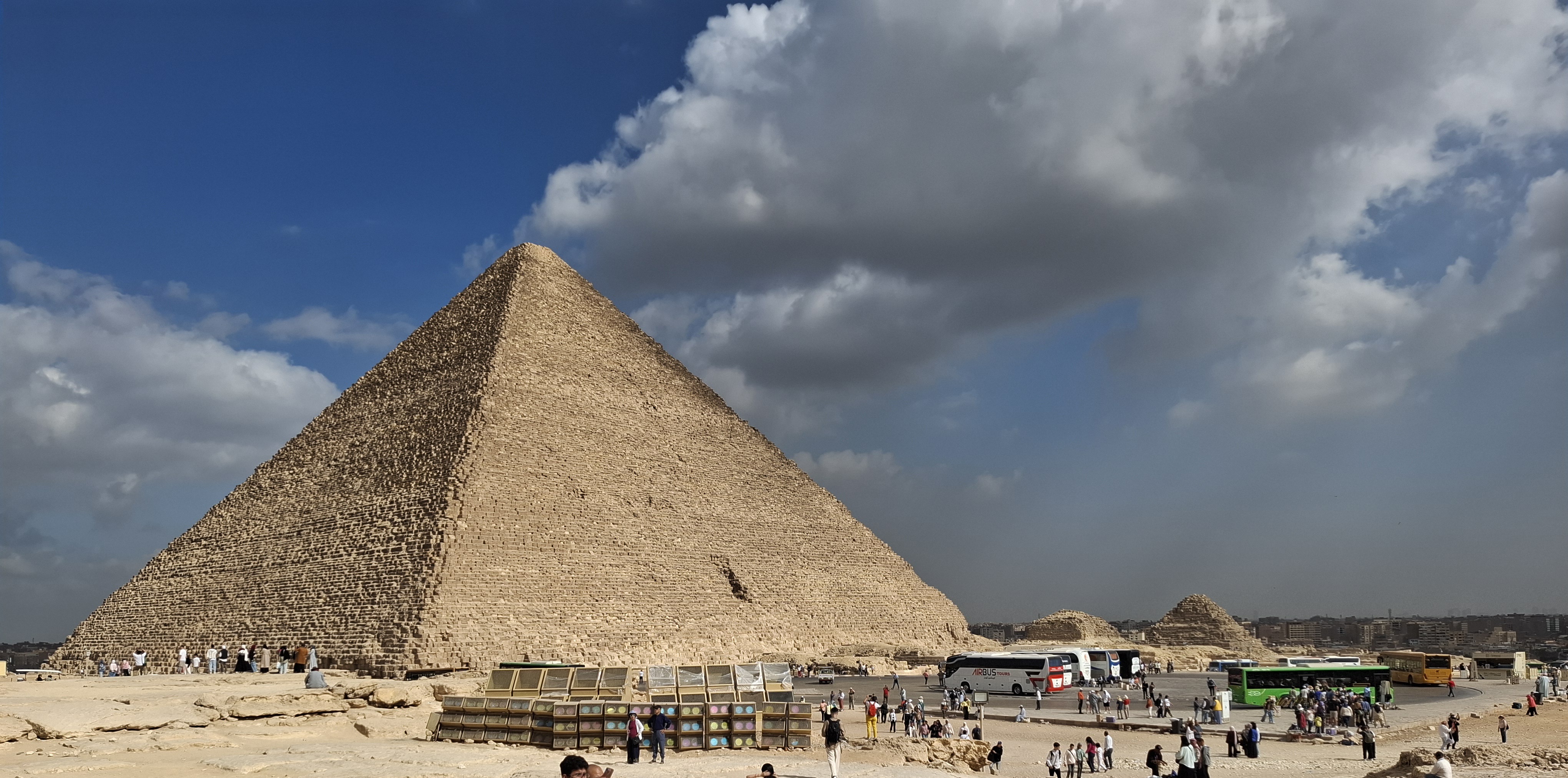
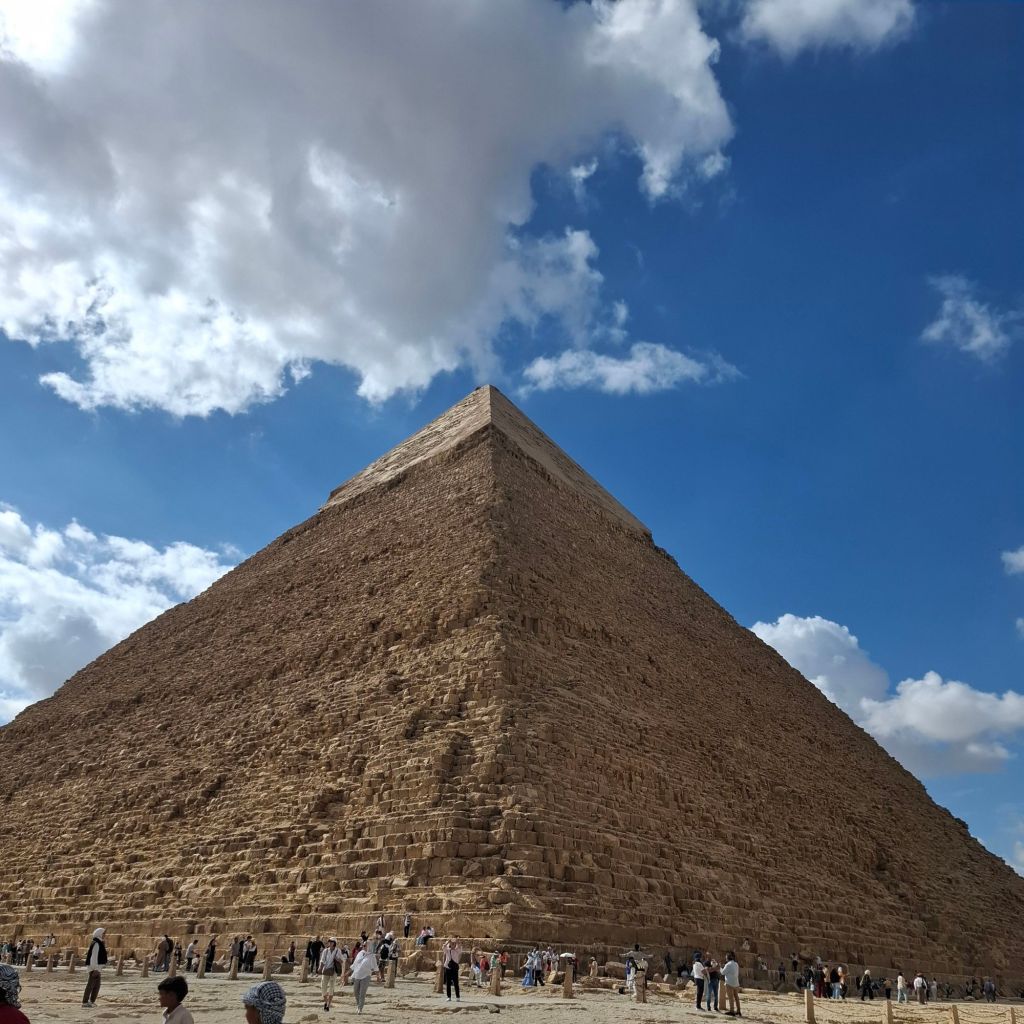
Our tour guide gave us lots of facts and figures. They asked us which was the largest of the pyramids. From up there, it seemed like the Pyramid of Khufu and the middle-sized pyramid of Khafre were the same size. However, the middle-sized one was set down a little. It was just as impressive. The tour guide explained that the Pyramid of Khufu was built for the great Pharoah Khufu.
The four main reasons of the Tomb of Pharoah Khufu were:
- It housed the body of the deceased and kept it safe.
- It demonstrated the status of the deceased and his family.
- It was a place where offerings could be brought to the deceased.
- It retained the deceased’s place in society.
The middle-sized pyramid, Pyramid of Khafre, was built for King Khufee’s son. It was not allowed to be bigger than his own pyramid. Originally it stood at 143.50 metres but now the current height is 136.40 metres.
We saw the smallest of the 3 main pyramids but never saw close up. It was originally 143.5 meters but now it is 136.40 metres. There were 7 other smaller pyramids and remains of the workers who spent years building the pyramids. These workers were not considered slaves. They were well looked after. They also had places for their burials close to the pyramids. Evidence has also shown there was a famine at that time. Despite this, there were lots of remains from good quality meats where the workers were located.
The final stop on the complex was the Sphinx. From the moment we saw it I thought it was mesmerizing! I think this was the busiest area of the whole complex. Funnily enough, we met the person who sat next to us on the plane the day before. He recognized us, came over, said hello, and shook our hands. He was joining a tour group the next day. He would visit other sites in Egypt too. These sites included Alexandra and Luxor. It would be amazing!
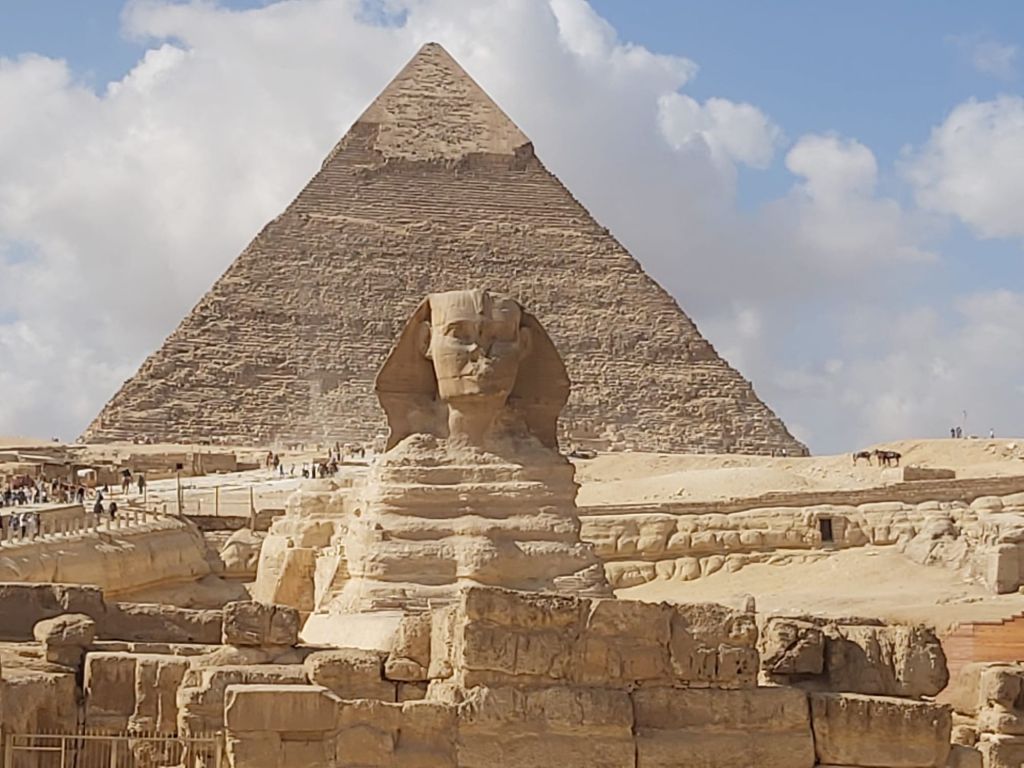
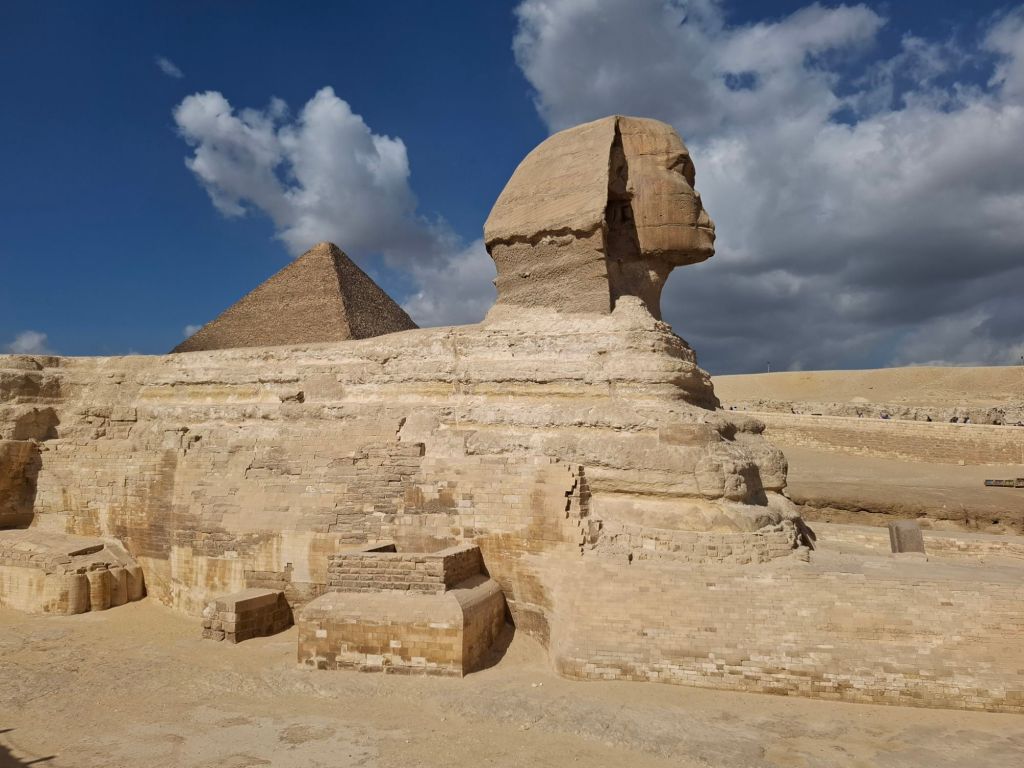
We exited the pyramid site near the Sphinx. We met up with our driver who was waiting for us. There were Inns and Hotels I recognised in this area as I had considered these before booking our trip. The views from their roof terraces would be amazing. They would overlook the Sphinx and the pyramids. However, it was in an area full of hustle and bustle. None of the hotels offered half board, which we chose to do.
papyrus store:
Our tour guide stated that we would be taken to some government approved stores now. We don’t really like shopping at all but we said we would go along with it, if this was offered. We were taken to a store which sold original papyrus paper artwork. Papyrus is an early form of paper. It is made from the papyrus plant (Cyperus papyrus), a tall reed that grew abundantly along the Nile River. It was one of the most important inventions for ancient Egypt. It served as the main writing material for literature and religious texts. It was also used for record keeping, documents, and letters. Egypt also exported Papyrus across the Mediterranean as it was highly valued. Papyrus also influenced the development of later writing materials and the word paper actually comes from papyrus.
Once we were in the store, we were shown a demonstration of how papyrus was made. Thick stems of papyrus plants are used to make it. The outer green part is removed and discarded. Then the inner pith is sliced into thin strips. These strips were then left in a bowl of water for at least 3 days. This process ensured the strips become transparent and flexible. The strips are then laid out with one layer horizontal. Another layer is placed vertical, overlapping, so it does not fall apart. They press it together in a heavy machine press. The plant’s sap acts as a glue. This sap sticks the strips together. They dried the papyrus out in the sun and then could use it as a writing material.
In the store there were hundreds of different paintings available. Some even glowed in the dark when the lights were turned off. These paintings changed into a different image in the dark. Lots also had glitter on them which I loved. There were lots of Egyptian style paintings to buy. There were also paintings of animals, famous footballers, and other religions such as Christianity. You could get your family members’ names put on pictures in Egyptian hieroglyphs. These were in cartouche style. In ancient Egyptian times, only Pharaohs—Kings and Queens—were allowed this privilege. We spent a while looking around the store. We finally chose a papyrus picture. We bought it as a nice keepsake for our Egypt trip.
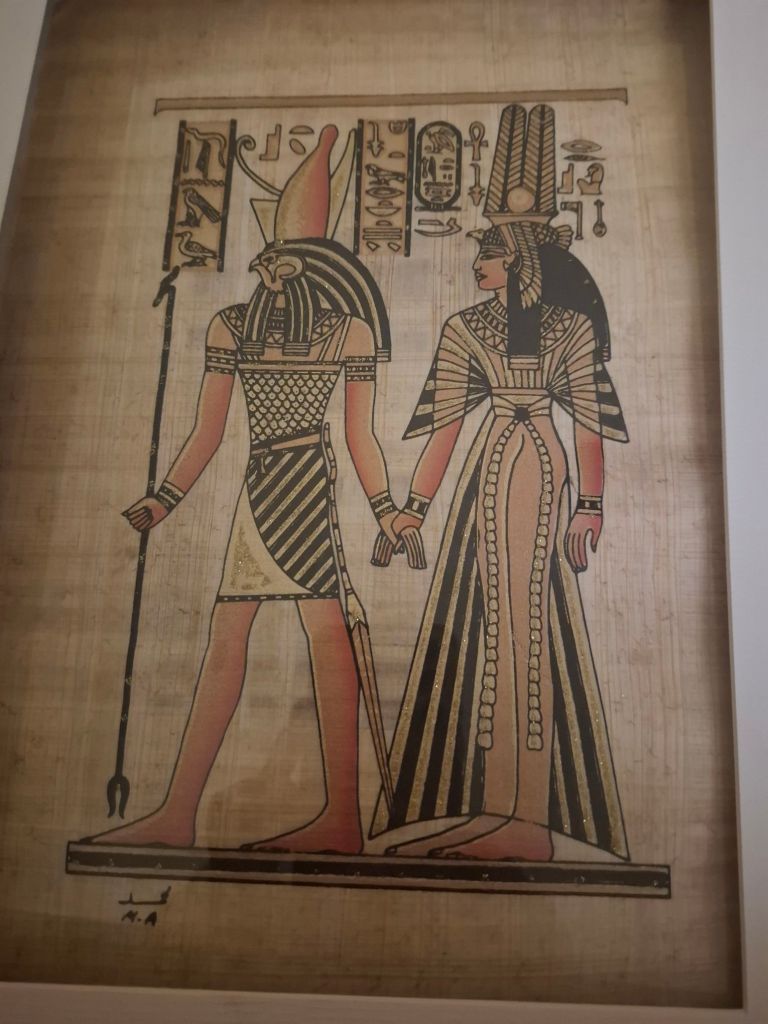
Our tour guide asked us if we still wanted to go to the perfume shop or any other shops. We explained we only had small hand luggage to fit things in. So, we would give this a miss.
grand egyptian museum:
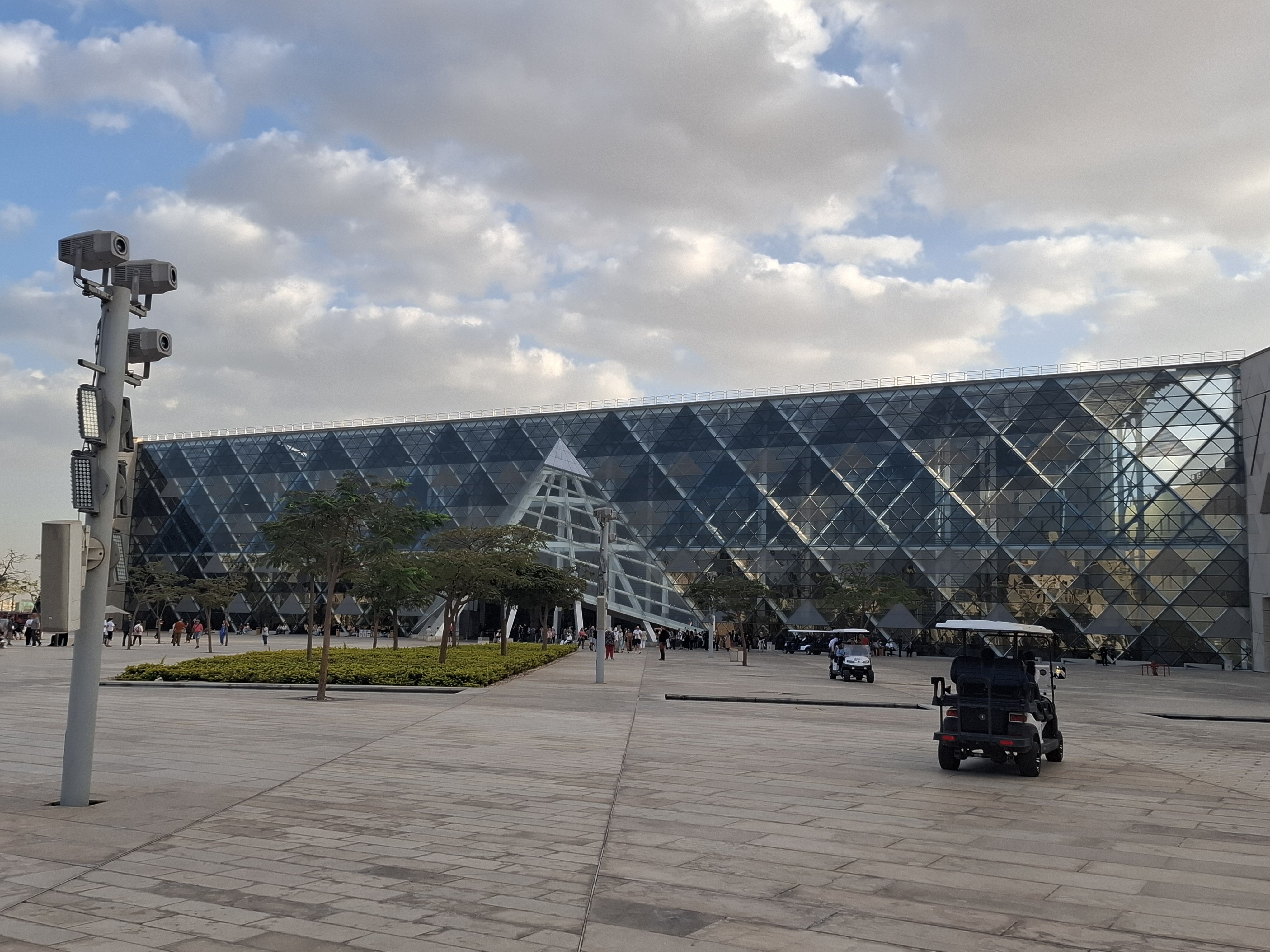
We then headed to the newly opened Grand Egyptian Museum. We had seen the impressive building when we arrived at our hotel. It is now the largest museum in the world for a single civilisation. It houses a collection of artifacts from various periods in the Egyptian civilisation. These range from the predynastic period to the Roman Egypt era. It cost around 1.2 billion dollars. Although it was announced in 1992, construction only started in 2005. The official full opening was not until November 1st 2025!
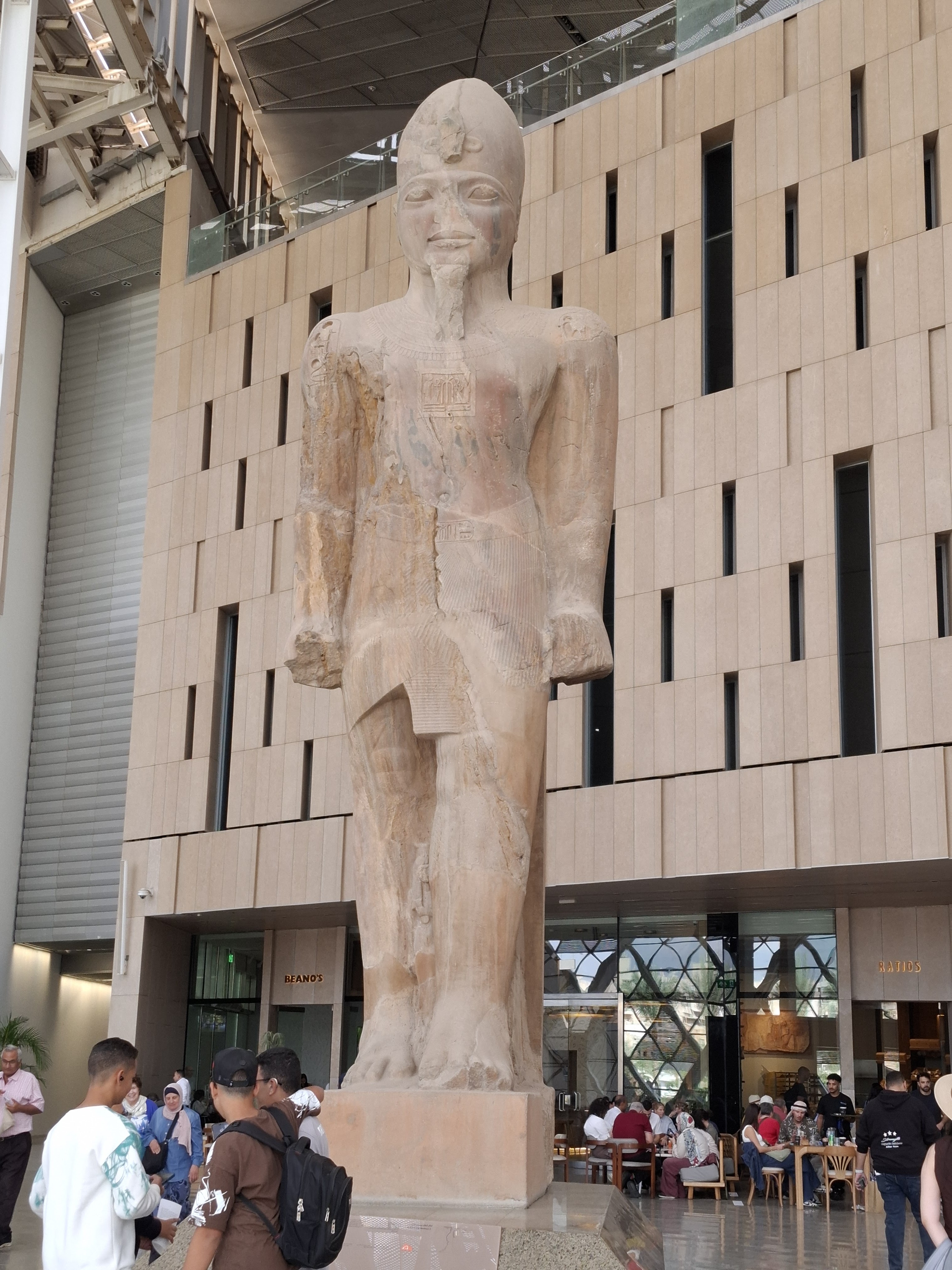
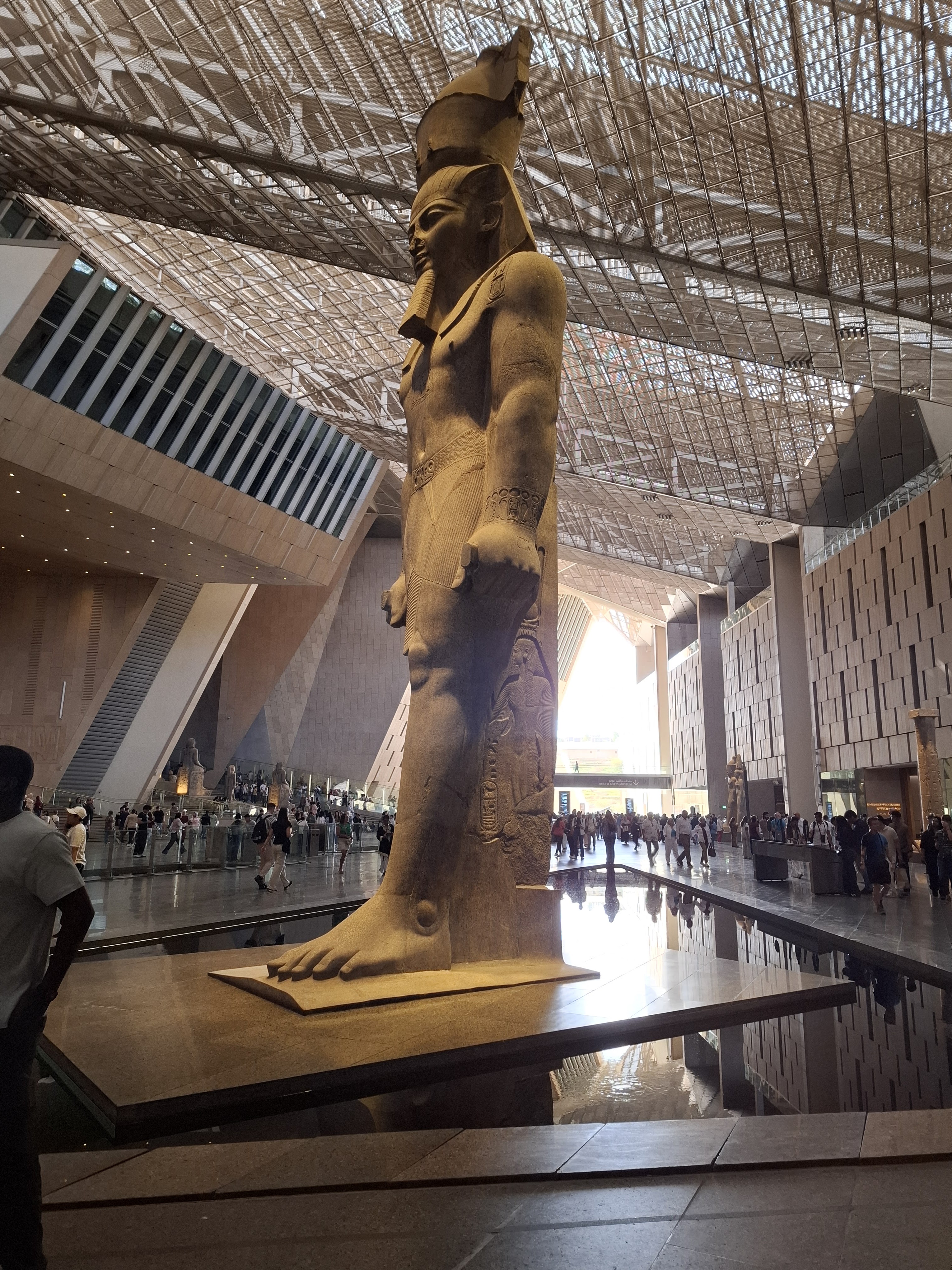
The granite colossal Statue of King Ramesses II was originally found in Memphis. It was also in the grand hall. It was on a pedestal in the middle of a triangular shaped pool of water. The water has symbolic meaning in Ancient Egypt. They believed that the world emerged from a watery abyss (or Nun). Therefore, the statue was placed on the water as a symbol of eternal rebirth. The statue stands at an impressive height of 1135cm and is 180cm wide. Carved behind the king’s legs are the 2 royal children Prince Khaemwaset and Princess Bintanath.
Our driver dropped us off nearby and we walked into the garden area in front of the stunning museum. They had little golf carts to take you to the entrance which we went on. The gardens themselves were really nicely kept. When you arrived at the main entrance, you could see that it was not just a museum. It had various places to eat as well as shops. By Starbucks, there was a water fountain to fill up bottles as many times as you want. My initial impression from the outside and first going in that it was very much like a modern airport building!
Once we got through the ticket entrance and security, we saw straight in front a giant colossus of Ramses II. It was very spectacular. We then followed our guide though the restaurant and shop area to come to the museum entrance – grand hall! This was very impressive! You see the amazement of the actual building. They used triangles – pyramid shapes throughout. There are various cartouches with Egyptian hieroglyphs. These contain the names of Kings and Queens. The grand hall also featured granite colossal statues of a Ptolemaic king and queen. It also included the granite Column of King Merenptah.
Just off of the grand hall, was the striking grand staircase. This staircase leads to the main exhibition halls of the museum. It was designed from the bottom to the top to take you on a chronological journey through Egyptian history. It displays 59 ancient archaeological pieces. These pieces range from The Old Kingdom to the Greco-Roman times. Some of the artifacts include The doorway of King Amenemhat I. There is also the Pyramidion of an Obelisk of Queen Hatshepsut. Another piece is the statue of God Ptah, King Ramesses II & Goddess Sekhmet.
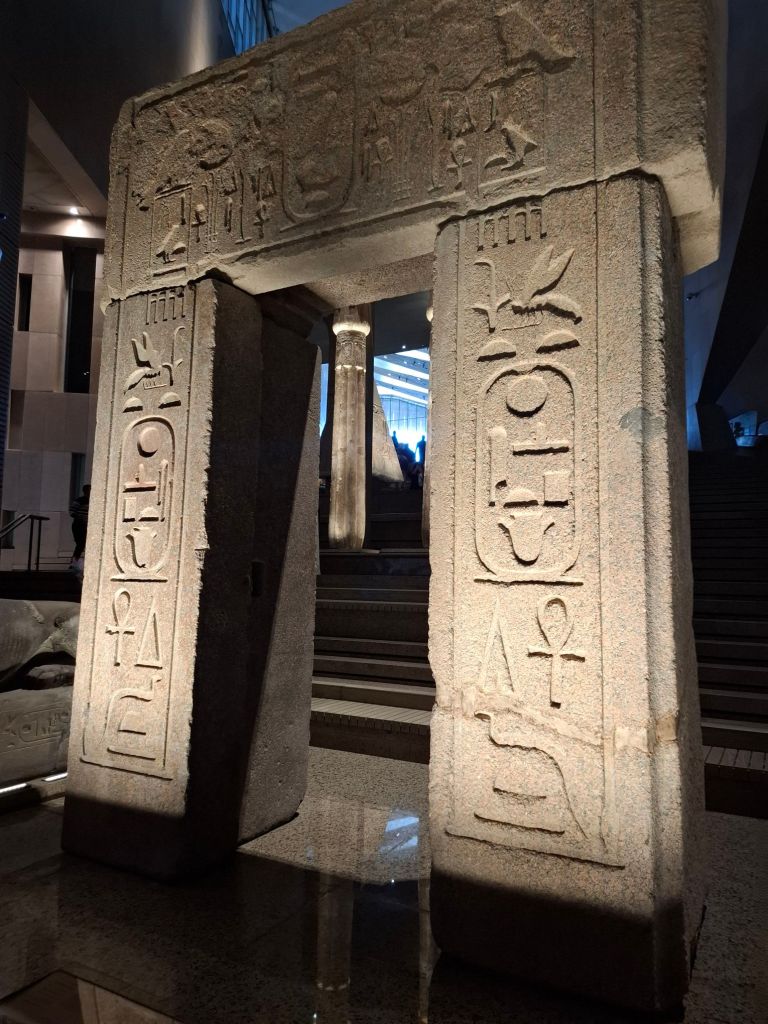
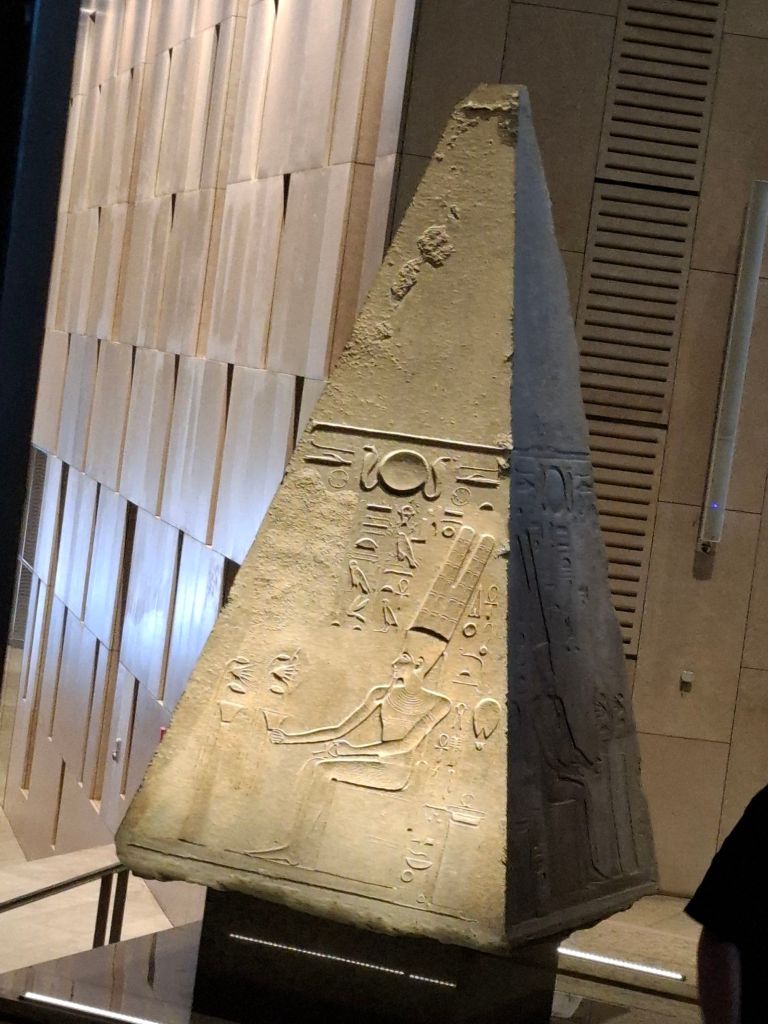
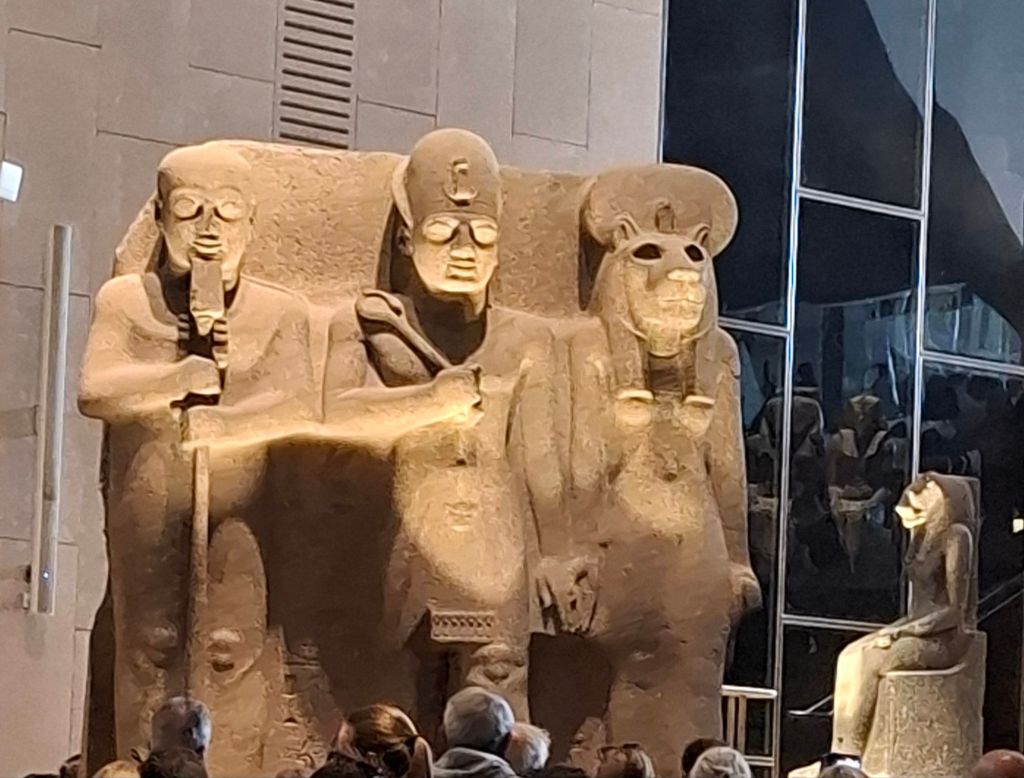
There are 4 slow moving travelators. The travelators run parallel to the stairs. This means you can explore the different levels at ease. At the top of the stairs, there is a panoramic view of the Pyramids of Giza.
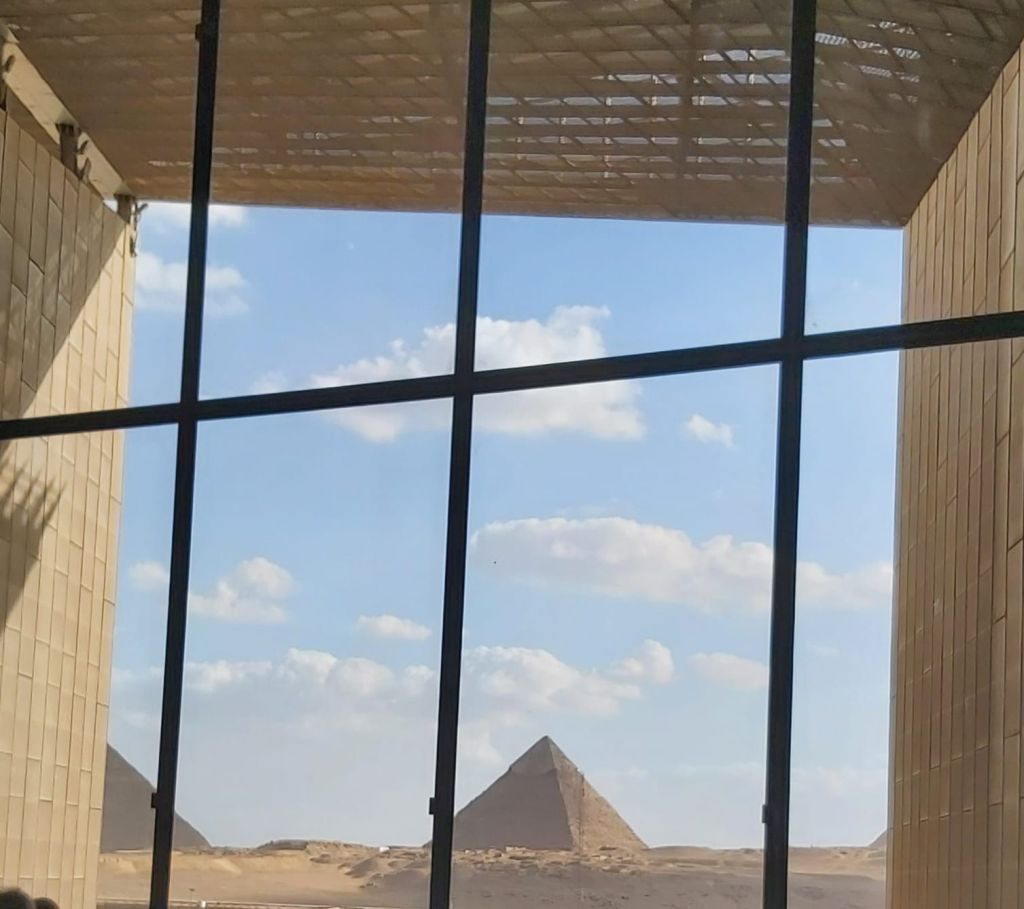
The 12 main exhibition halls follow and these are arranged in time periods c.3100BCE – 400CE. Halls 1 – 3 cover the pre-historic, pre-dynastic, and early-dynastic eras. They also include the Old Kingdom eras and the era of the first transition. Halls 4 – 6 cover the Middle Kingdom and Second Transition. Halls 7 – 9 present artifacts from The New Kingdom era. Halls 10 – 12 display the Third Transition, The Late period and the Roman & Greek eras of Egypt. These main halls display over 24,000 Egyptian artifacts!
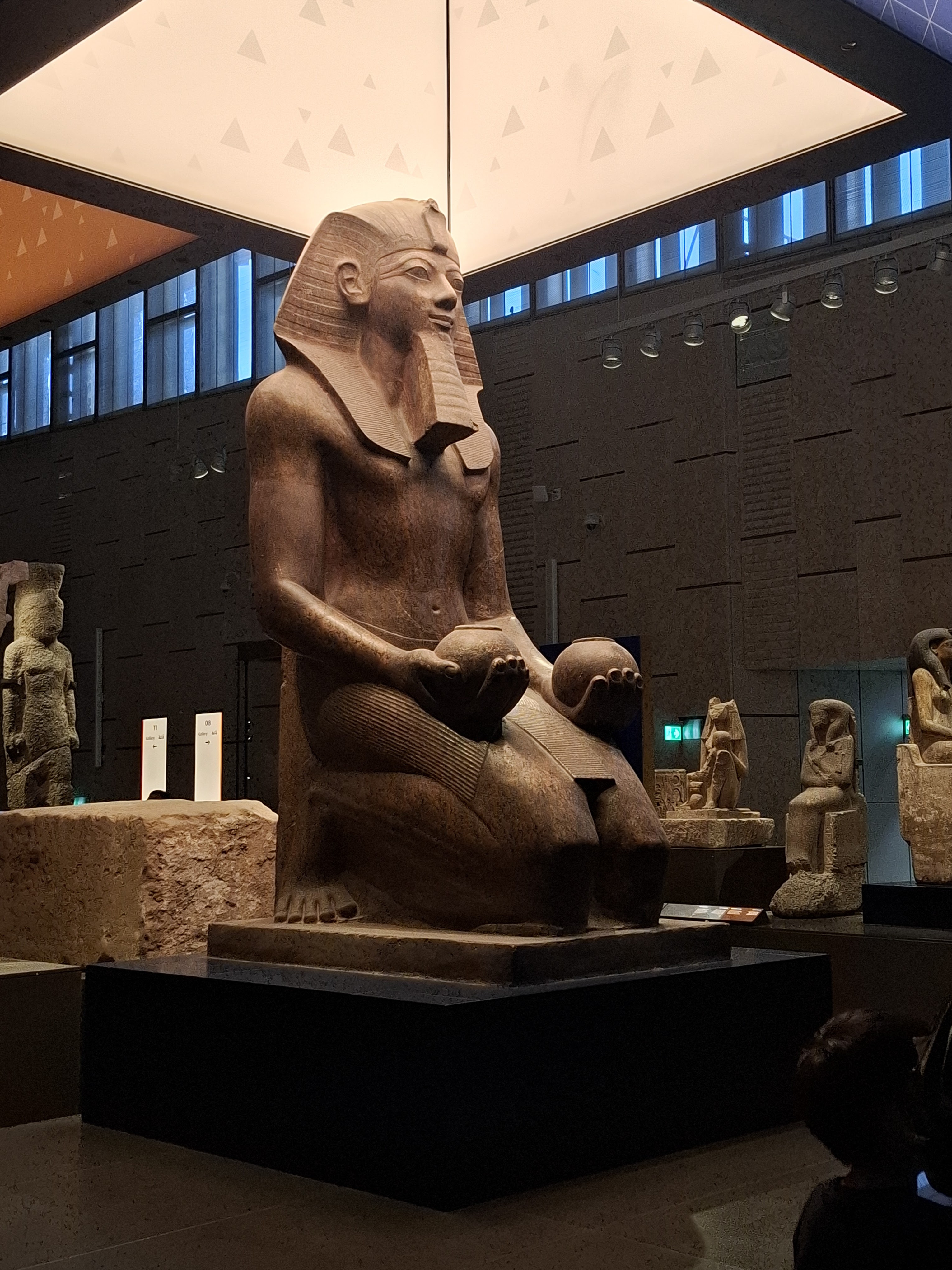
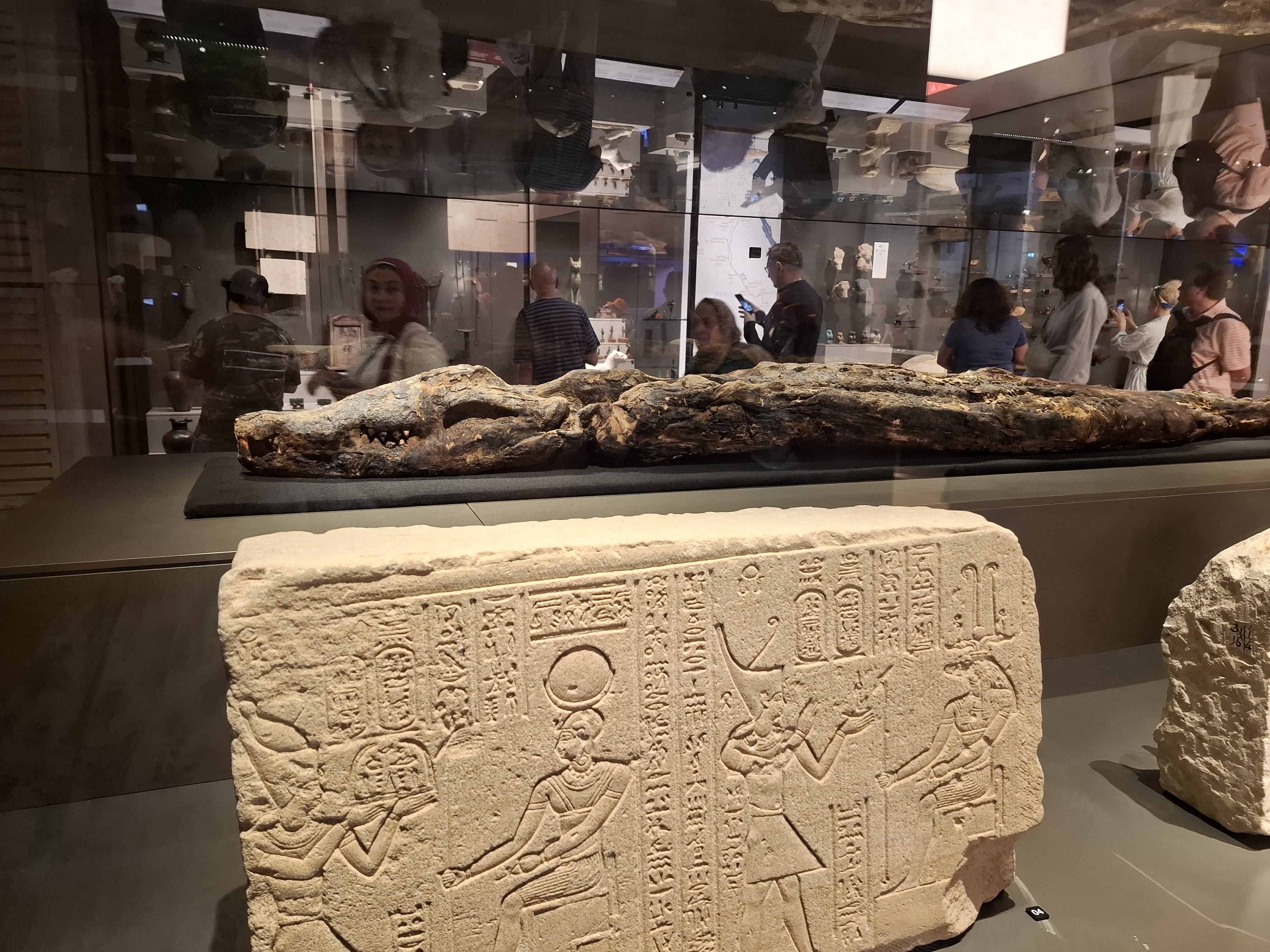
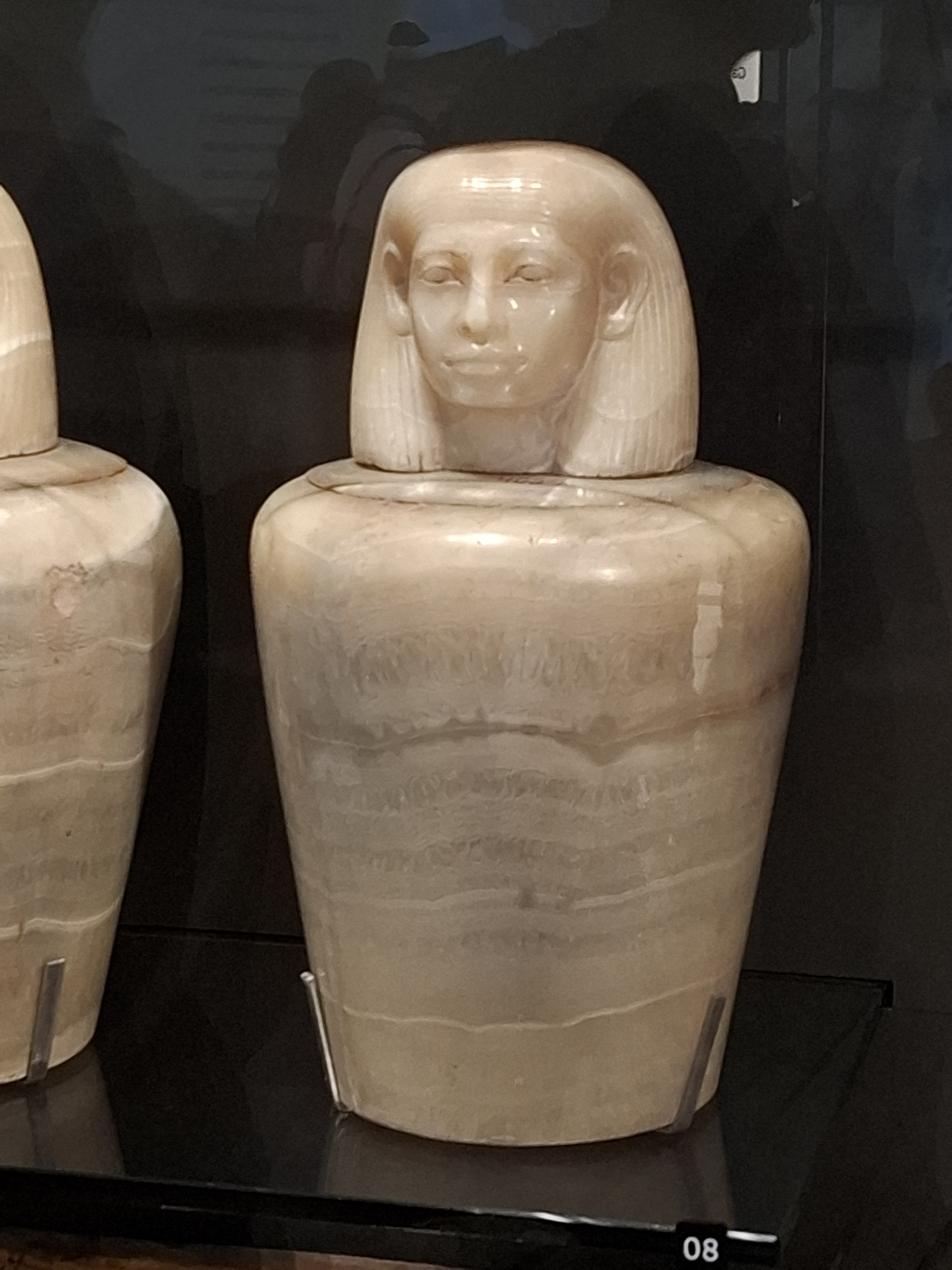
2 of the main halls were dedicated to King Tutankhamen, the pharaoh of the Eighteenth Dynasty who ruled ca. 1332–1323 BC. The tomb of King Tutankhamen was discovered in 1922. Howard Carter and his team found it in The Valley of the Kings near Thebes (now known as Luxor). The tomb was hidden from robbers. Debris covered it. Therefore, it is known as the only near-intact royal burial from ancient Egypt.
King Tutankhamun’s exhibitions halls:
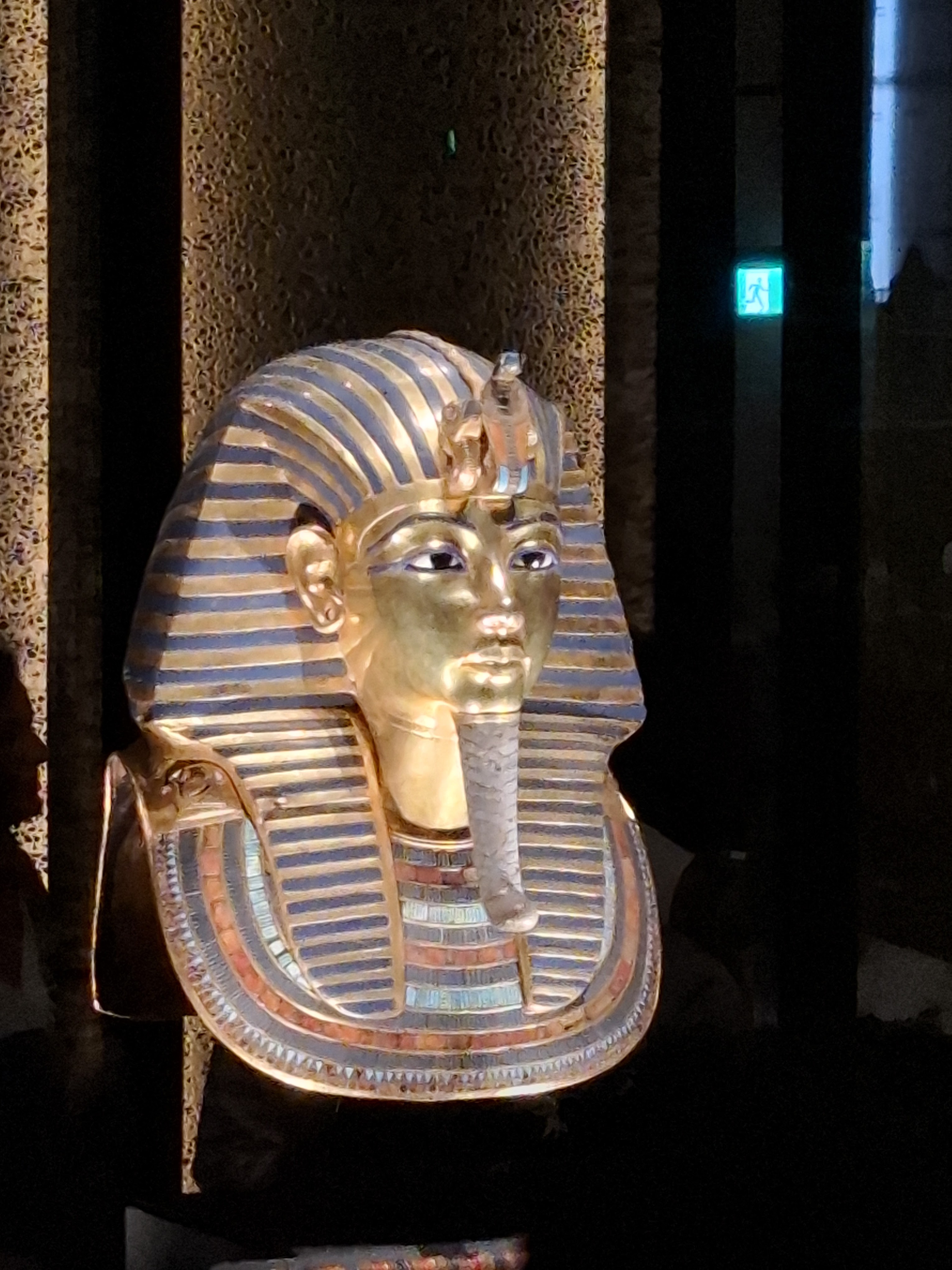
The Museum’s artifacts included some of the most famous objects in the world. Among them was the solid gold Burial Mask of Tutankhamen. This mask would have been placed over Pharaoh Tutankhamen’s head and shoulders of his mummified remains. The golden funerary mask bore the likeness of Tutankhamen. It was crafted in the form of the Egyptian god of afterlife, Osiris. On the back of the mask, there are Egyptian hieroglyphs. They contain a magic spell from the Book of The Dead. This book had several magical spells in it to assist ancient Egyptians journey through the Duat (death) and afterlife. The mask had inscriptions regarding various Egyptian gods which would protect Tutankhamen through to the After life.
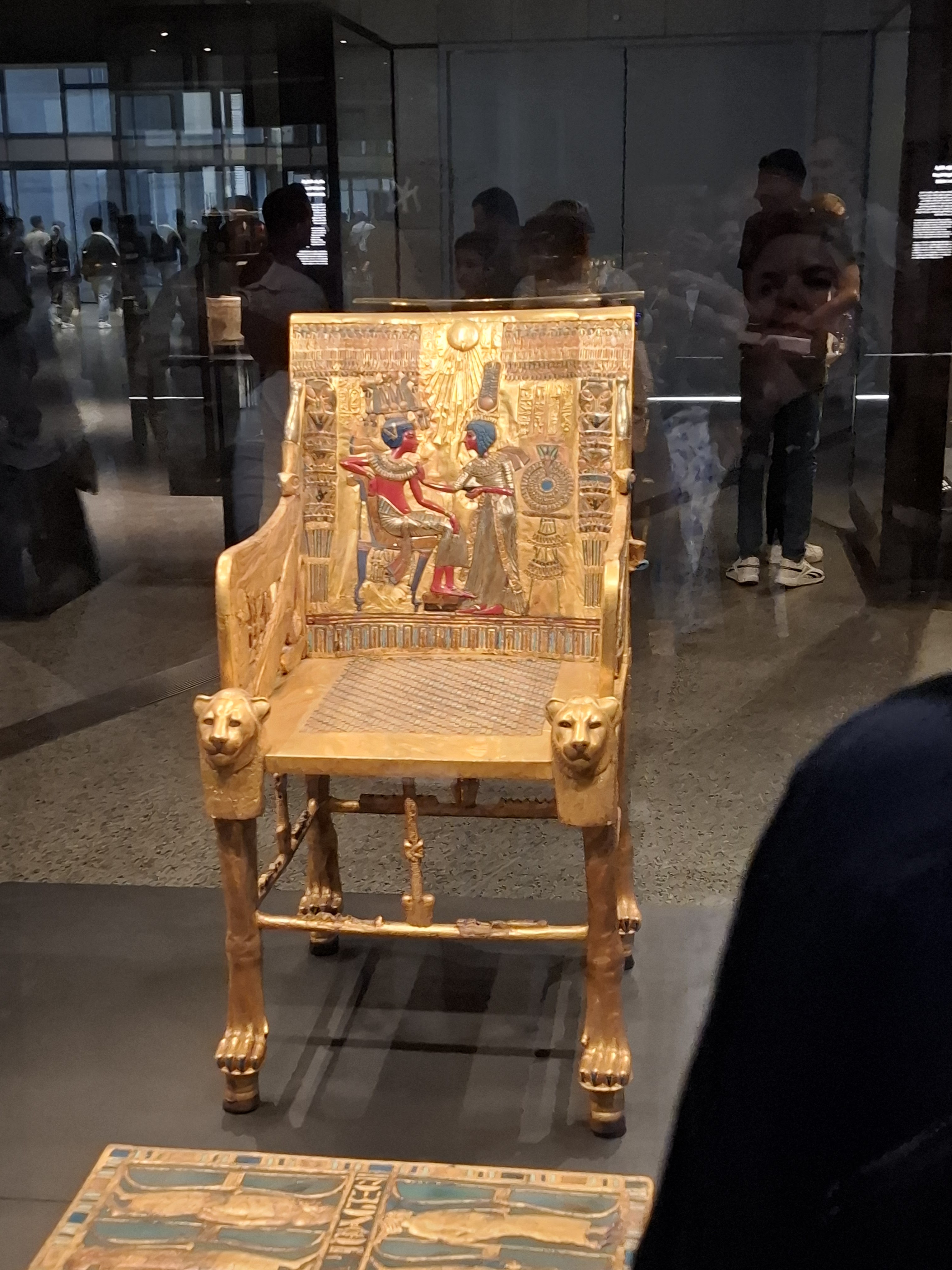
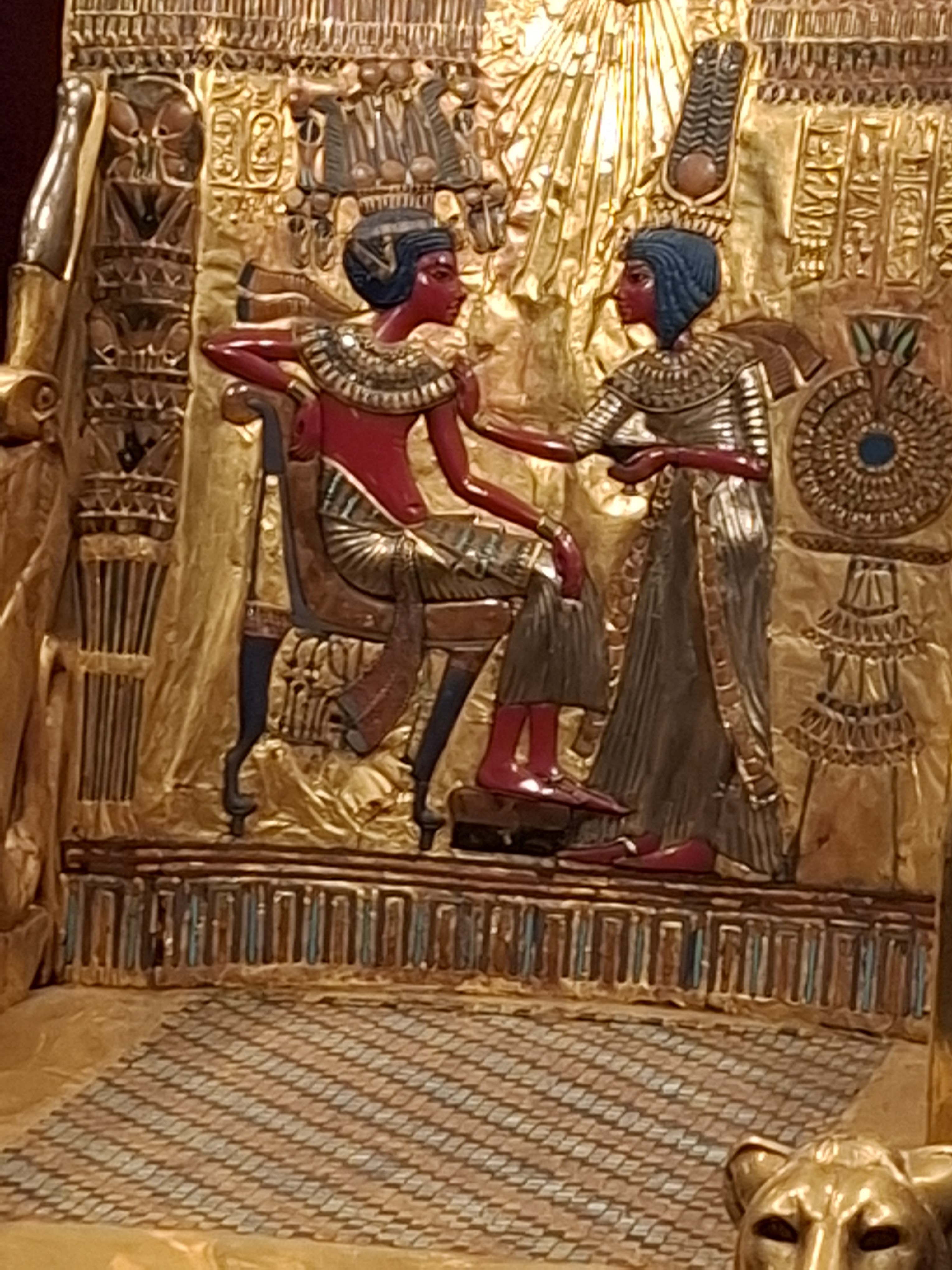
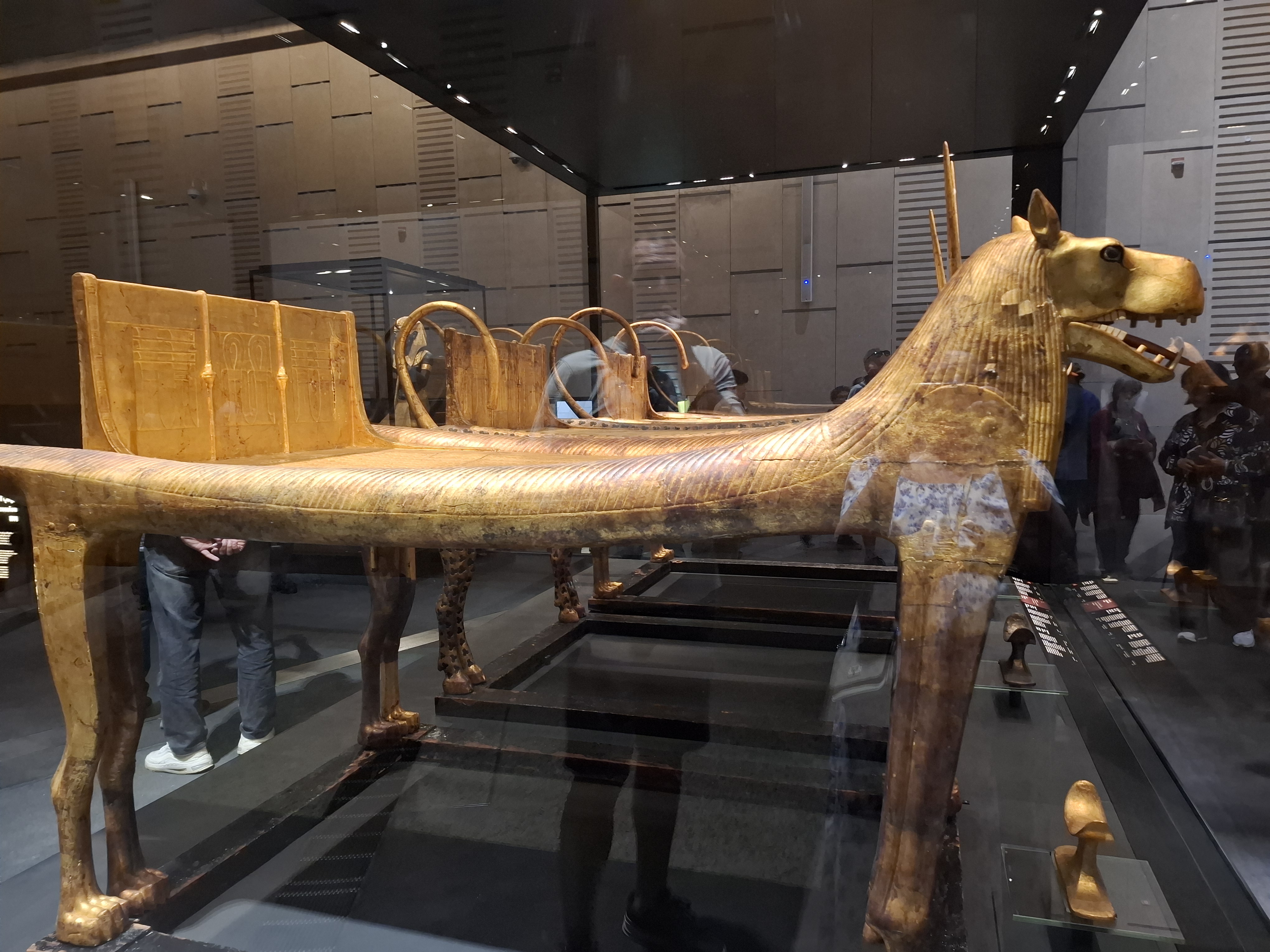
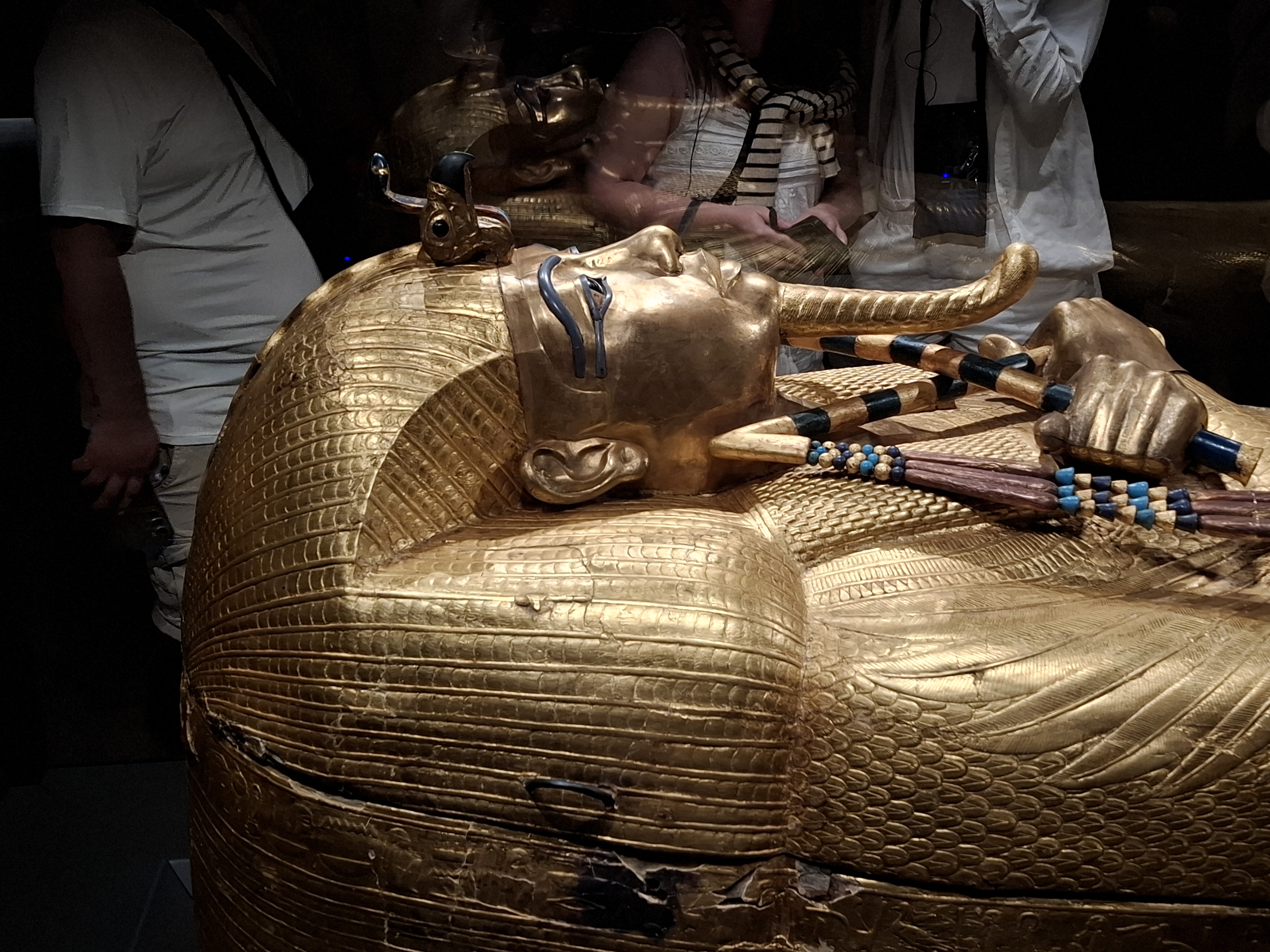
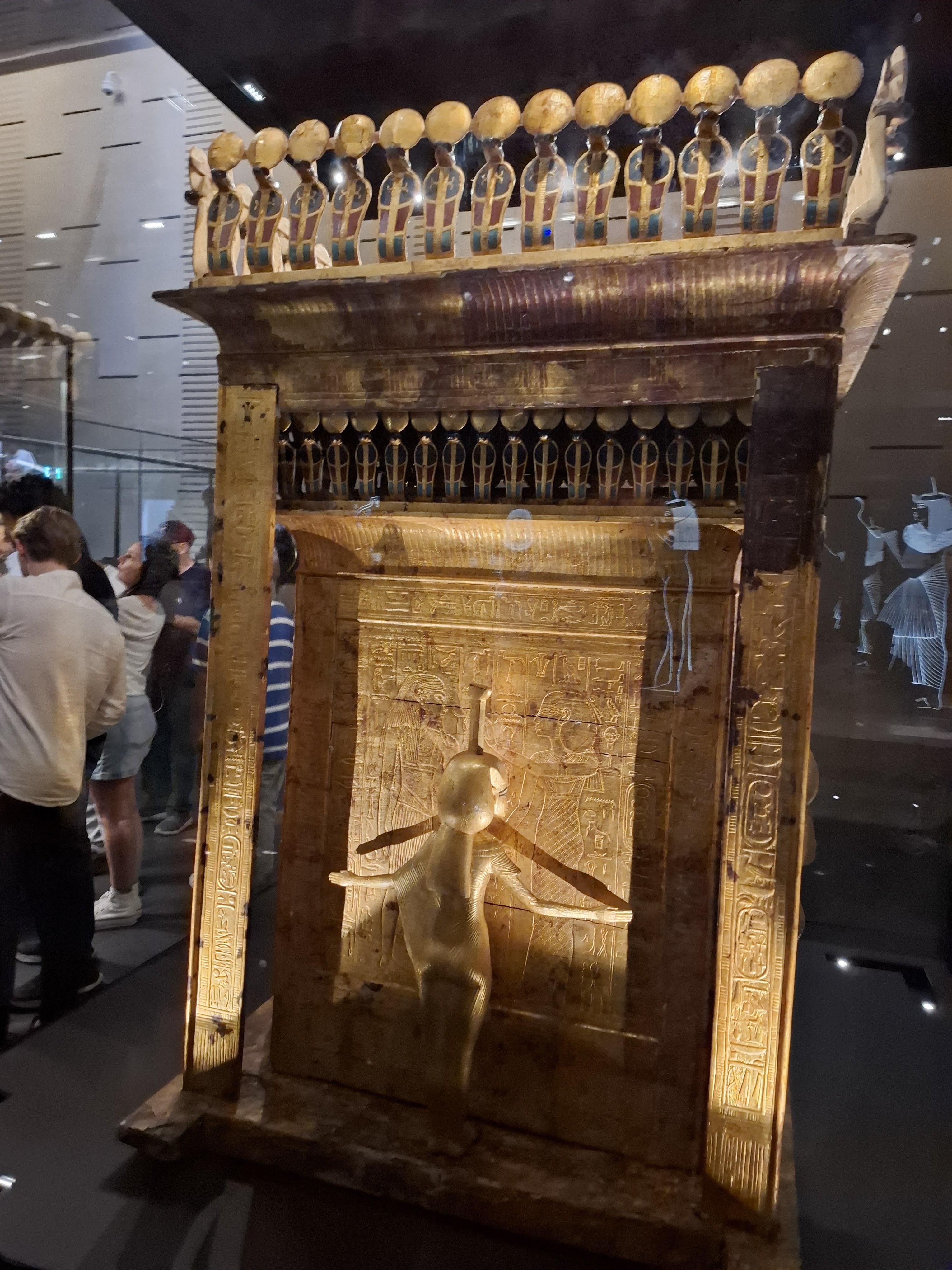
Other amazing artifacts relating to Tutankhamen in the museum included the Golden throne. The throne was decorated beautifully with a picture of the king and queen on it. Gilded royal beds and couches featured animal heads and legs. These parts represent different goddesses. Their purpose was to protect the pharaoh on his journey to the afterlife. The Canopic Shrine on a Sledge protected the King’s mummified internal organs. It had four figures of the goddesses Isis, Nephthys, Selket, and Neith with outstretched protective arms on it. There were 3 canopic coffinettes. These are miniature coffins used to safeguard the mummified internal organs. There was also the outer coffin, which was the largest of three coffins found inside the sarcophagus of King Tutankhamen.
Khufu’s Boats Museum:
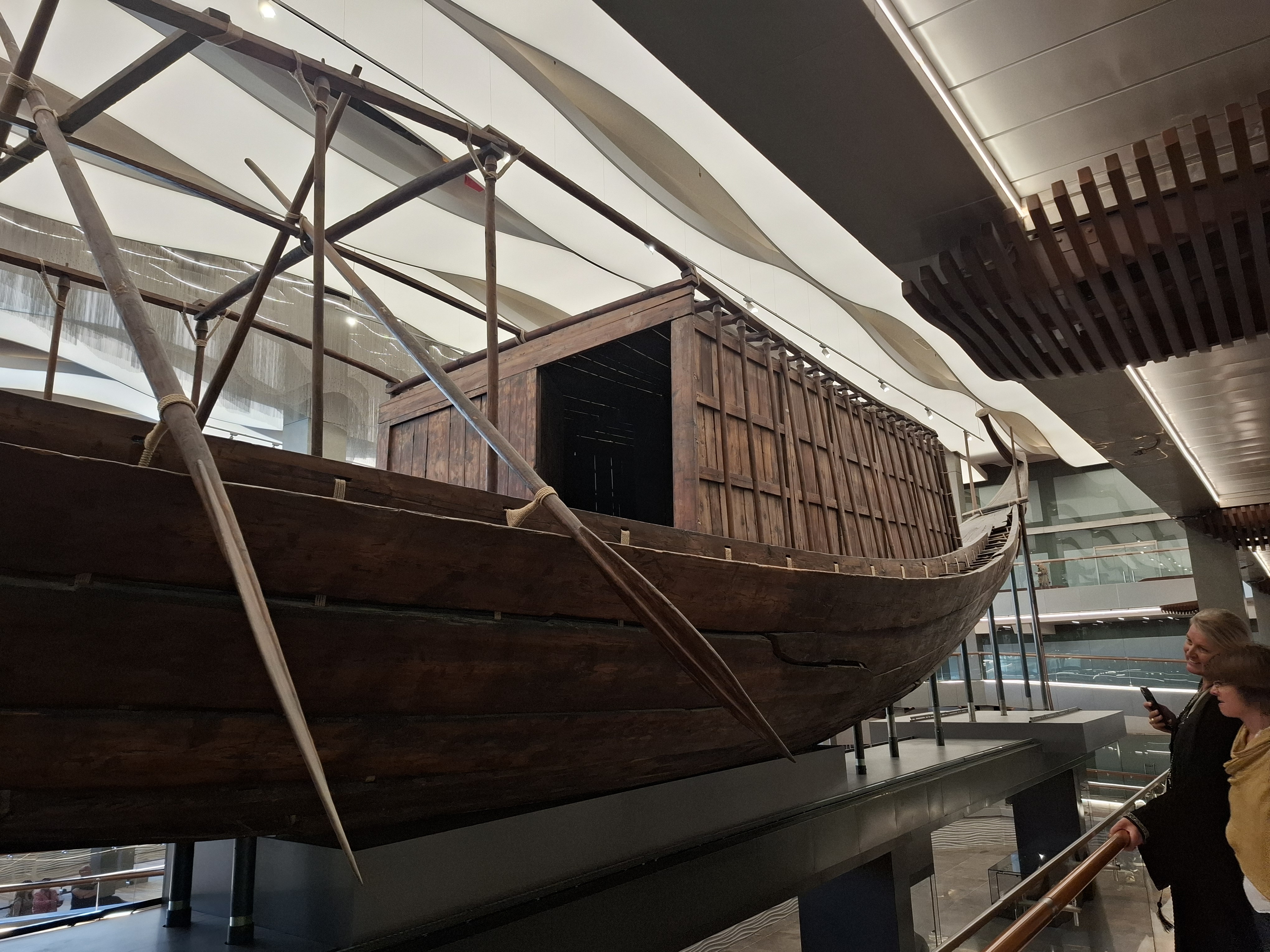
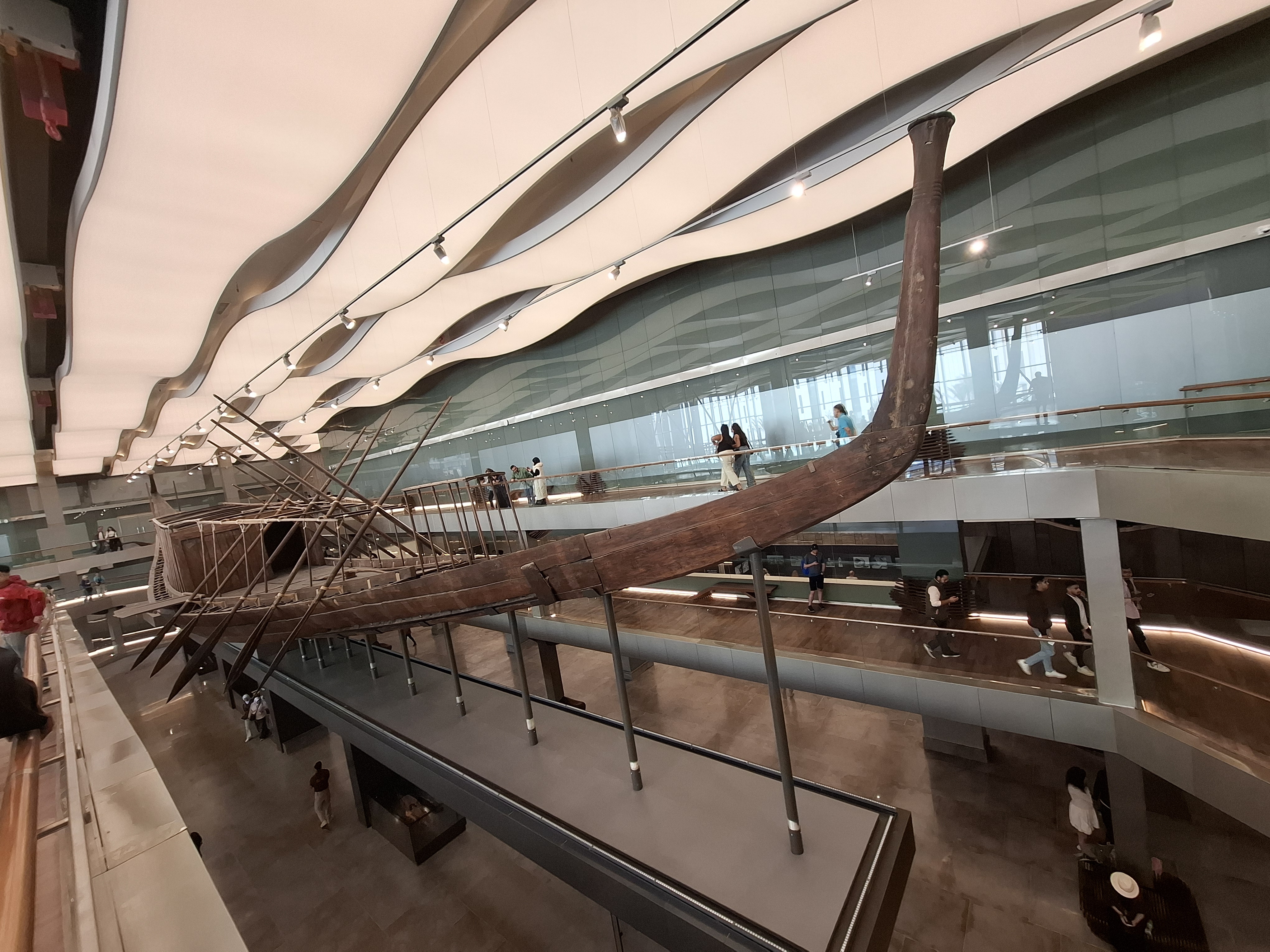
Our guide then took us out of the main museum. He led us to the Khufu’s Boats Museum. I never even knew it existed, so it was a pleasant surprise. We had seen some models and also papyrus pictures in the main museum of these boats. This museum housed the solar boat of King Khufu. It was discovered in a sealed pit within the pyramid complex. The pit was covered by limestone blocks. It is thought to be built around 4600 years ago and is 140ft long made of wood. It is considered to be one of the oldest wooden boats and organic artifacts known in the history of mankind. However, the function of these types of boats are still disputed. Many people believe it may have been used for transport during King Khufu’s funeral. It would have traveled from Memphis to the burial site within the pyramid complex in Giza. Others think the boat was intended for the king’s afterlife. It would transport his soul to join the sun god, Ra.
included lunch:
We finished in the boat museum. Then we headed back to the car. We found our driver to take us to have some lunch. We were taken to an Egyptian cafe/restaurant which was supposed to serve chicken and rice. However, when we got there, they said that they only had pizzas available. We were happy with this because we were very hungry after all of the exploring we had done! The restaurant apparently had a fire the day before and that is why they could not offer a full menu. The pizzas were lovely. We had some nice pickled vegetables. They came with a local Egyptian dip made with garlic and yogurt. The dip was very nice. We also had a much needed bottle of water. Our tour guide ordered our meal for us. The cost was included in our all inclusive tour, so they paid the bill.
boat trip on the river nile:
Our last stop was to the River Nile in Cairo for a boat trip. We were really tired by now. The traffic was pretty horrendous even though it was a Sunday. We were told they work 7 days a week there. So the roads are always like that every day when people are making their way home. It took quite a while to reach the boats. We had to cross a busy road on foot, navigating about four lanes of traffic! This is normal in Giza and Cairo though as there doesn’t seem to be any pedestrian crossings or bridges around!
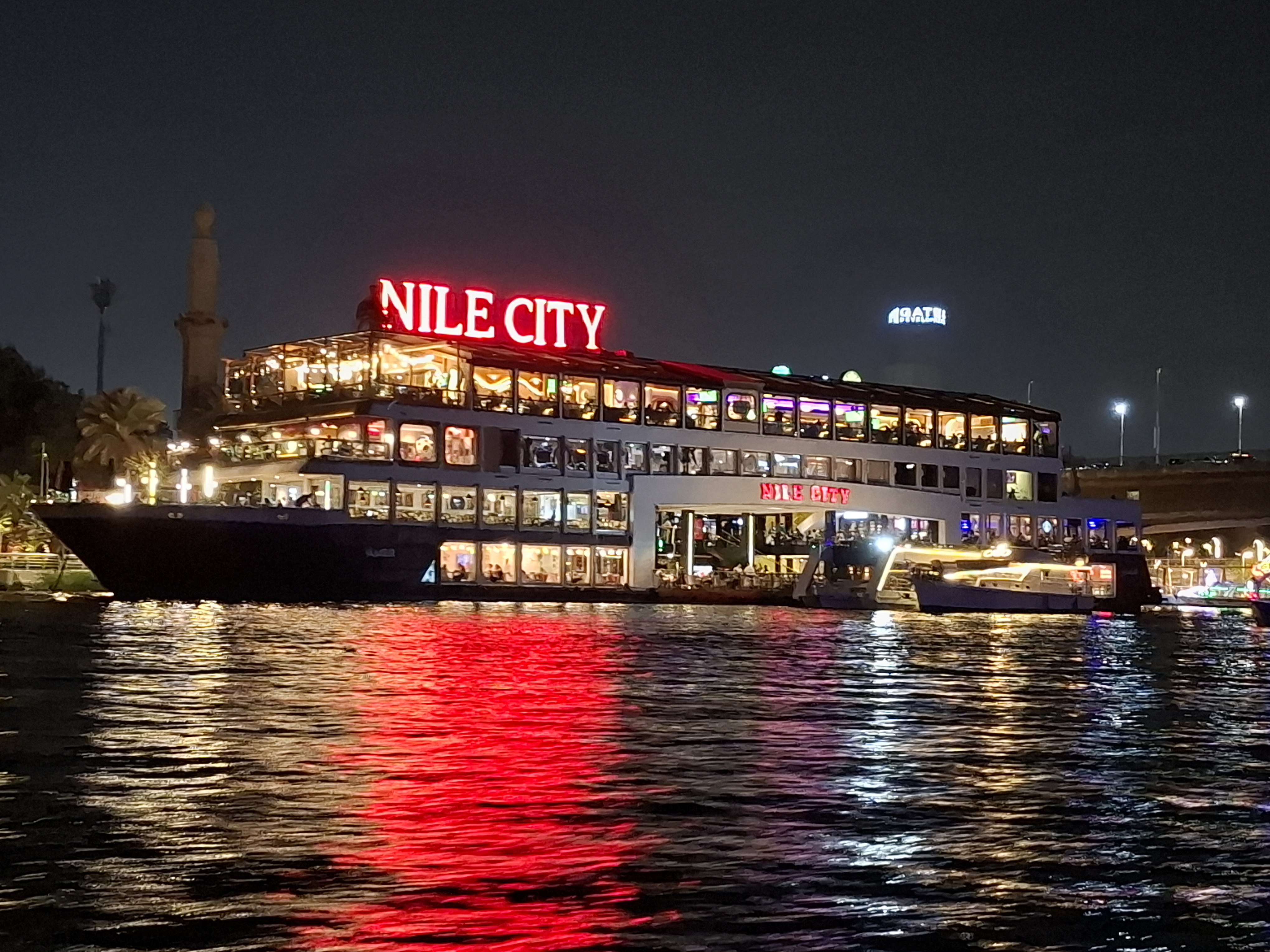
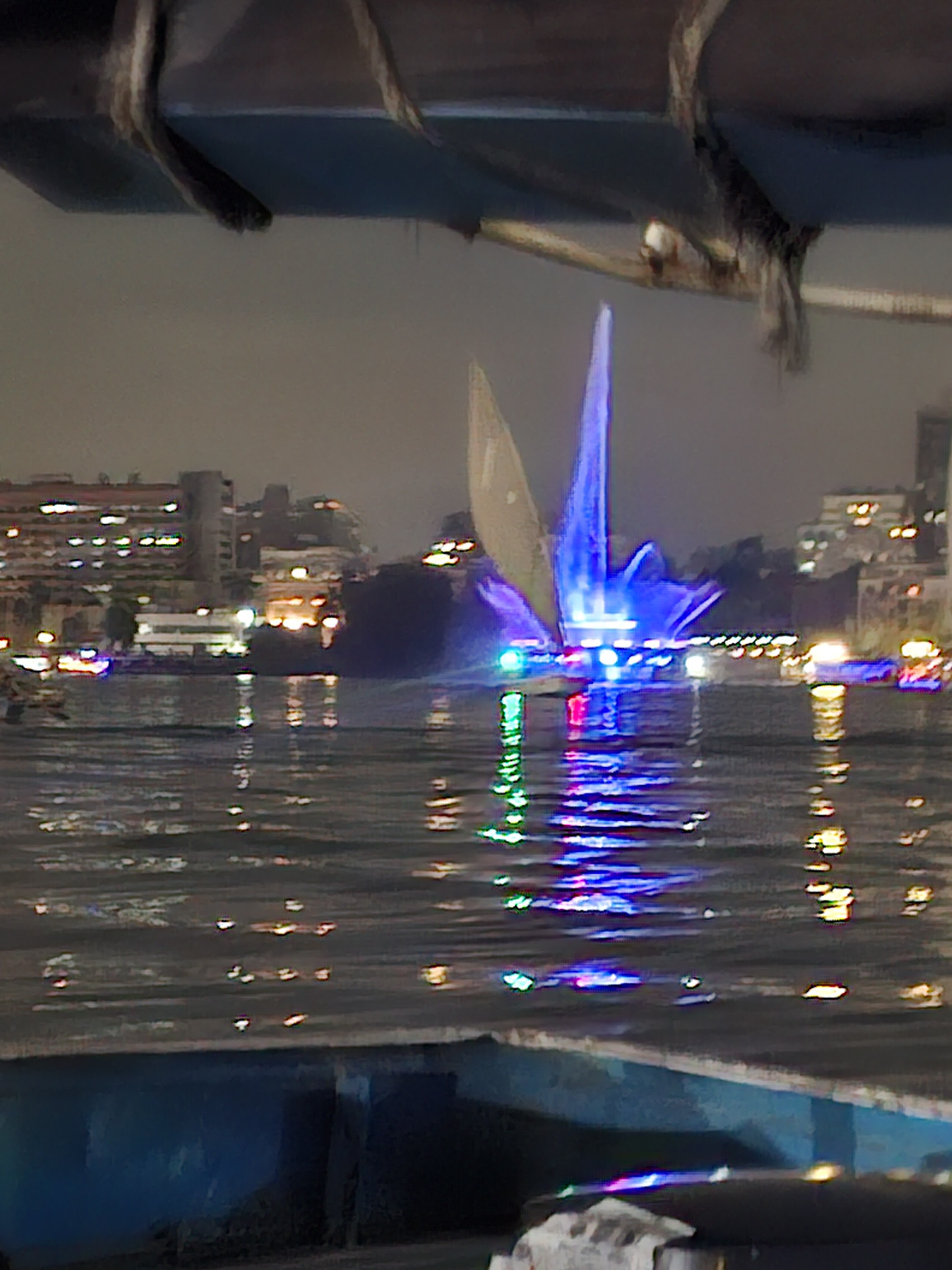
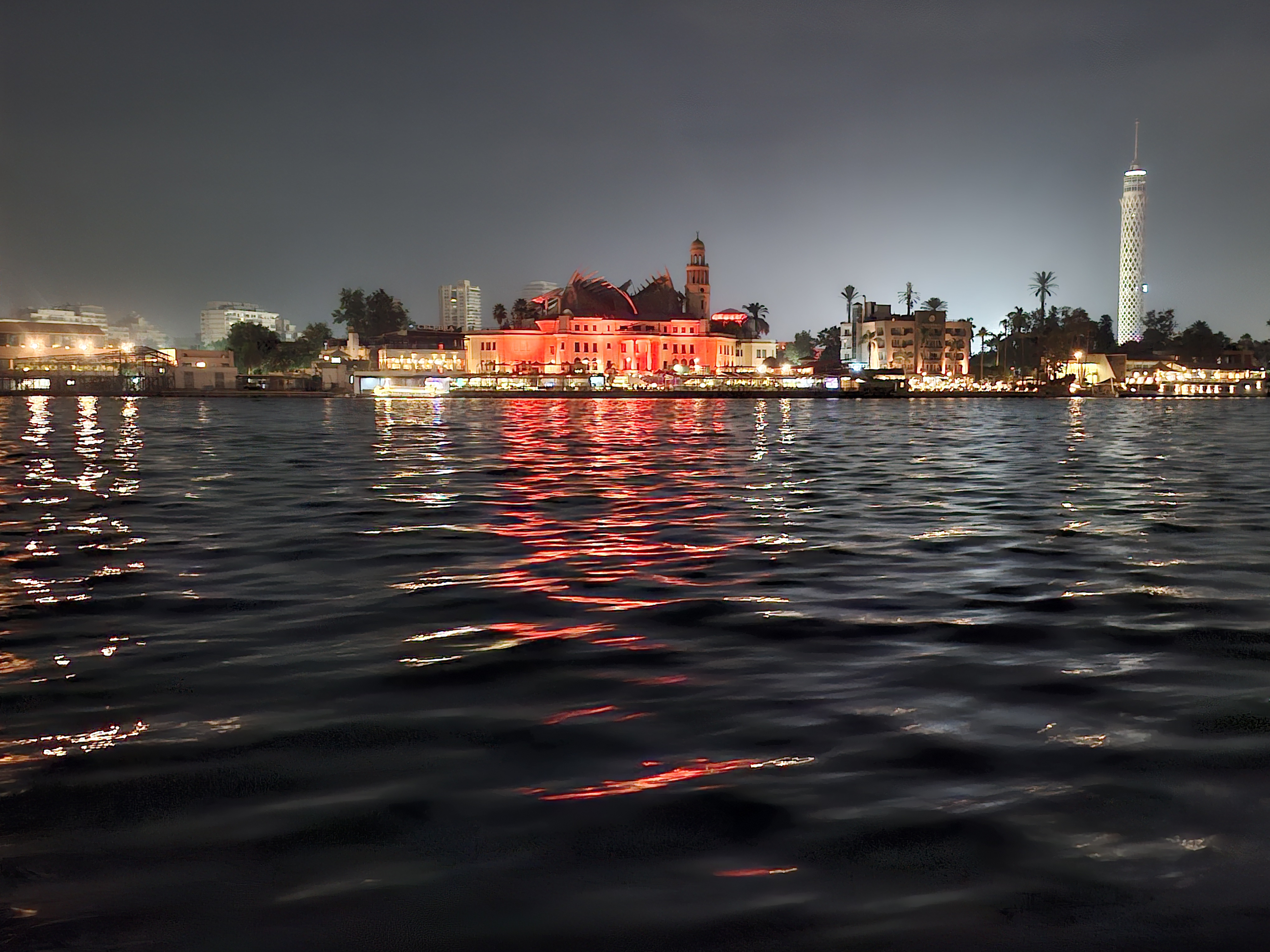
We reached the starting point of the boats. Then, we finally made it onto the boat for a relaxing ride along the Nile. It was dark by now. Cairo looked lovely all lit up. There were many hotels, towers, and also bars along the river. There were some amazing bars along the edge which were made to look like big boats. We also saw the coloured lit up fountain in the middle of the river. However, it was not on for long when we were on the boat. A boat went very fast. It overtook us, and when we looked, it was a boat that looked like a sports car. It looked like a lot of fun!
The boat trip came to an end. We found our driver again. He took us on the long, busy journey back to our hotel. It was an amazingly memorable day which I will always remember.
back to the hotel:
We had a lovely evening meal again in the hotel. We sat outside in the garden/patio area of the restaurant. This setting was really nice. We ended the evening with a glass of wine on our balcony. We overlooked the pyramids. We were ready to have a more relaxing day on Monday.
Day at the hotel pool:
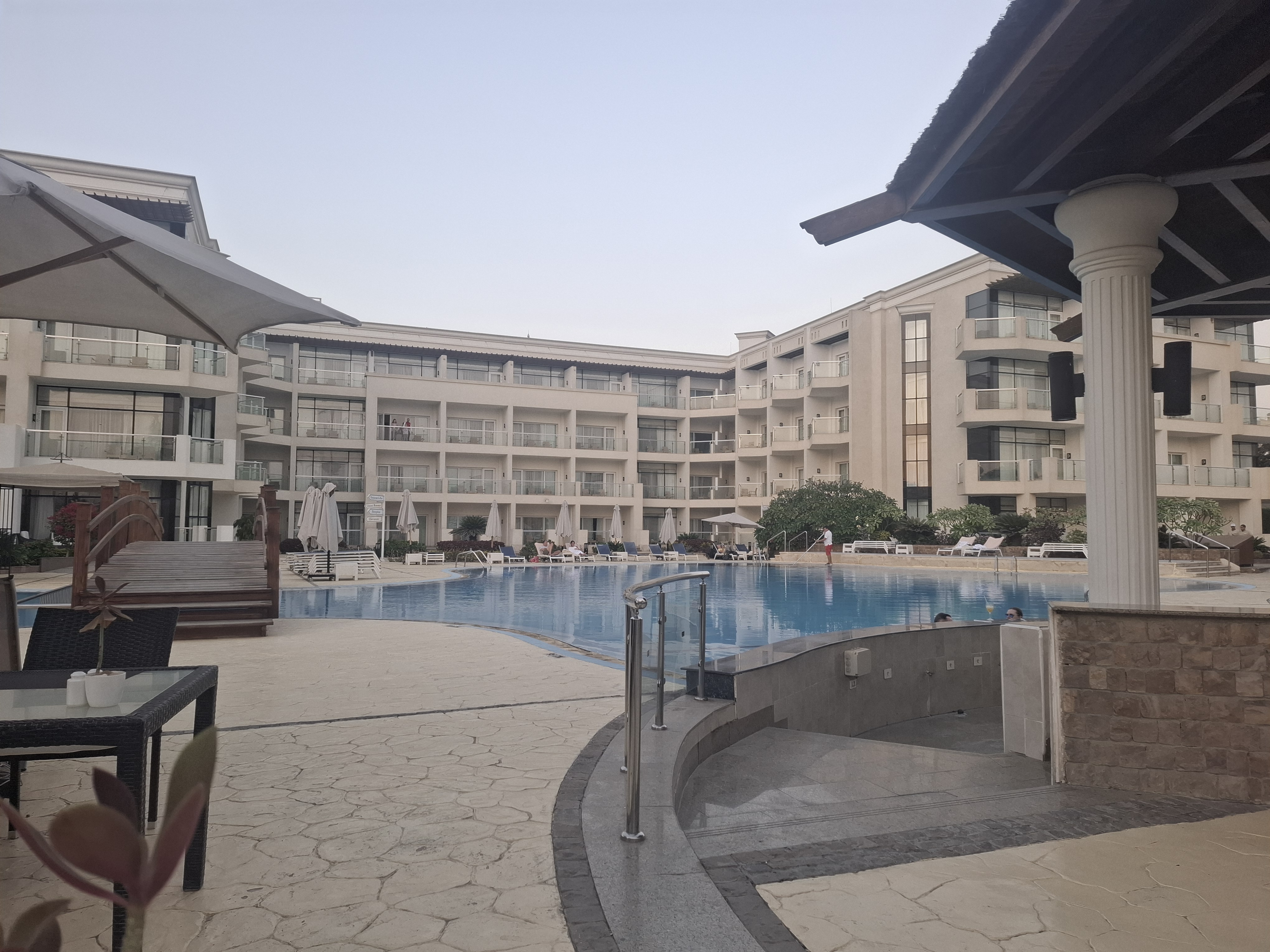
Monday was our actual anniversary. We always said that we would enjoy a nice chilled day around the hotel pool. This was after our long day exploring the previous day. We had a lovely start to the day in the outside area of the restaurant for our breakfast. Then, we soon headed to the pool for some sunshine. The hotel pool was lovely. It was also very quiet with not many people around it. Most people go out exploring the area when staying here. The towel guy brought towels to the sun beds we chose. When we needed a drink, the bar waiter was always waiting. He was helpful, bringing drinks over. We had a lovely chilled day. When the sun went in, we sat at the tables by the pool bar. We enjoyed a couple of drinks before heading up to get changed for our evening meal.
Our last evening in the hotel:
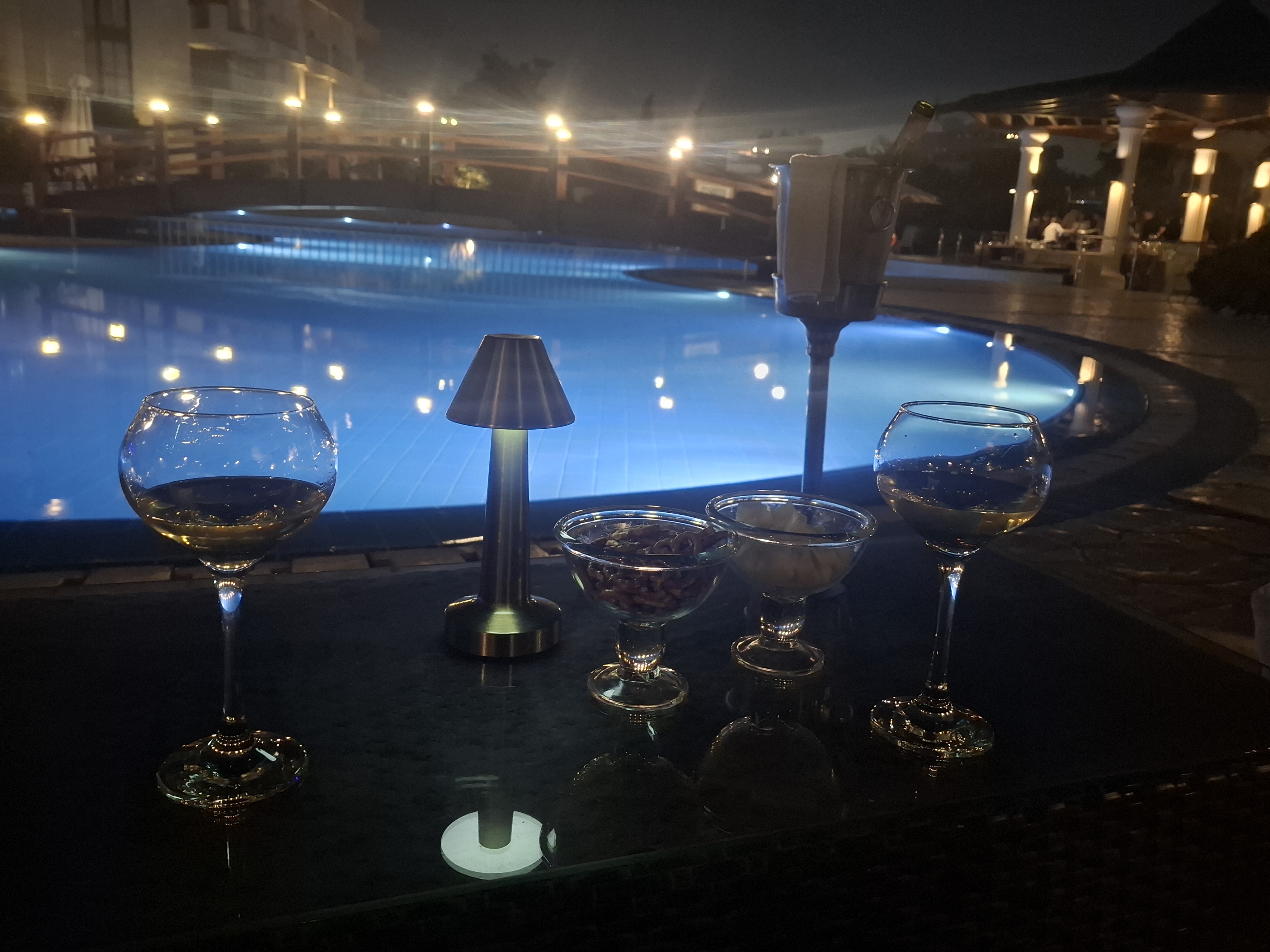
Dinner was great again and we sat outside again and had a lovely local bottle of wine with our dinner. There was a live singer by the bar near the pool. We decided to have a drink in the comfy sofa chairs there. We ordered a bottle of white wine. They brought it over in a cooler with some lovely snacks. The snacks included pretzels and cheese! The waiter served us our wine when we needed it. It was a really great last evening on our special trip.
The day we traveled home, we were not getting picked up until 3pm. We had a tasty, relaxed breakfast. Then we spent another couple of hours chilling at the pool. Our transfer guy communicated excellently with us. He even sent us a picture of the car he would be arriving in.
Journey back to england:
It was soon nearly time to head back to the airport. We had a quick freshen up and change. Before we knew it, our transfer driver was in reception waiting for us.
Our flight was around an hour late. We found out later that the airport had been closed for maintenance earlier. Our flight was the first one of the day, even though it was now past 6pm! The airport was small. It was very easy going through security and passport control. It had an area with various different options for food and snacks too. There was plenty of seating further on by the gates also.
I would definitely recommend our trip to anyone who is looking to experience Giza for themselves. The airport, hotel, and transfers were all brilliant. The all-inclusive day tour with an amazing, knowledgeable tour guide and driver was an incredible experience. We will never forget it.
🌟 Giza – Fast Facts:
✨ Overview
- Giza sits on the west bank of the Nile, just minutes from central Cairo.
- It’s home to Egypt’s most iconic ancient monuments and the world-class Grand Egyptian Museum (GEM).
🏛️ The Pyramids & Sphinx
Great Pyramid of Khufu
- The last remaining Ancient Wonder of the World.
- Built with around 2.3 million limestone blocks.
- Remarkably aligned to the four cardinal directions.
Pyramid of Khafre & Great Sphinx
- Khafre’s pyramid appears tallest due to its elevated base.
- The Great Sphinx — a colossal lion-bodied guardian — is one of the world’s oldest monumental sculptures.
Pyramid of Menkaure
- The smallest of the three but noted for its original granite casing and refined craftsmanship.
🖼️ Giza Plateau Highlights
- A UNESCO-listed archaeological zone featuring pyramids, tombs, temples, and the remains of ancient workers’ villages.
- Perfect for half-day or full-day excursions with panoramic photo opportunities.
🏛️ Grand Egyptian Museum (GEM)
- Located just 2 km from the Pyramids.
- The largest archaeological museum dedicated to a single civilization.
- Features the complete Tutankhamun collection, monumental statues, and advanced immersive exhibits.
- Architecture inspired by the pyramids, with sweeping triangular geometry and vast glass façades.
🕒 Best Time to Visit
- October–February offers the most pleasant weather.
- Early morning is ideal to beat crowds and enjoy cooler temperatures.
- Evening Sound & Light Show available for an atmospheric experience.
🚗 Getting Around
- Easily accessible from Cairo hotels via taxis, private guides, or ride-hailing apps like Uber/Careem.
- Giza is also serviced by the new Sphinx International Airport, providing convenient access for international arrivals.
🌿 Additional Attractions
Giza Zoo (historic landmark)
- Established in 1891; known for unique 19th-century architecture including a bridge by Gustave Eiffel.
- Currently undergoing redevelopment.
Nile-side dining & hotels
- Many top-tier hotels offer pyramid-view rooms and rooftop dining at sunset.
🎒 Travel Tips for Clients
- Wear comfortable shoes — the plateau is expansive and uneven.
- Bring sun protection: hat, sunglasses, sunscreen, and water.
- Expect some walking between pyramid sites.
- Camel and horse rides are available but should be booked through reputable operators.
Thank you for reading. Please contact me for any further information and questions about traveling to Giza. You can also reach out if you want information about any other location you would like to travel to.
If you would like to share any of your travel experiences, please contact me. I can share them on my website to inspire other travelers.



Leave a comment